The complete guide · Norway
Hiking in Norway
A landscape designed for walkers — long valleys, sea-edge cliffs, cabins that have stood for a hundred years, and a national right that lets you camp almost anywhere. Here's how to plan a hiking trip in Norway from scratch.
Last updated May 2026
Norway is one of the few countries that makes hiking a constitutional principle. The 1957 Outdoor Recreation Act guarantees the right to walk, camp, swim, and forage on uncultivated land — even when it's privately owned. The Norwegian Trekking Association (DNT) runs more than 550 mountain cabins you can sleep in for less than a hostel. The trail network reaches the Arctic Circle and beyond. There is no other place in Europe quite like it.
This page is the hub. It links out to the iconic trails, the practical guides, and everything else on the site that touches Norway. Use it as a starting point — or if you're an experienced hiker, jump straight to the section you need.
Start here
- Never been to Norway? Read when to go (month by month) first. Most iconic trails are only safely walkable from late June to mid-September.
- Planning to wild-camp? Allemannsretten — the right to roam covers what's legal, where, and for how long.
- Multi-day hut-to-hut? How the DNT cabin system works — the membership, the key, and the etiquette.
The iconic trails
- Besseggen Ridge Walk - One of Norway's Best Hikes — Jotunheimen. Besseggen is one of Norway's best hikes: 14 km point-to-point between two differently-coloured lakes in Jotunheimen. Trail logistics, the ferry, and why this ridge walk belongs on every Norway list.
- Galdhøpiggen - Hiking the Highest Mountain in Norway — Jotunheimen. Galdhopiggen is the highest mountain in Norway at 2469 m. 12 km return from Spiterstulen, summer glacier crossing, and what to bring for Northern Europe's highest peak.
- Hardangervidda Crossing - Norway's Classic Multi-Day Traverse — Hardangervidda. Hardangervidda hike: 110 km across Europe's largest mountain plateau in 5-7 days. DNT cabin route, weather, and what makes this traverse harder than it looks on the map.
- Kjeragbolten - Hiking Kjerag Above the Lysefjord — Lysefjord. Hike to Kjeragbolten: the boulder wedged 1000 m above the Lysefjord, Norway. 11 km return, 570 m climb, and one of the most dramatic views in Norway.
- Lofoten Islands Hike - 8-Day Coastal Trail from Å to Svolvær — Lofoten. The classic Lofoten islands hike: 150 km coastal traverse in 8 days. Jagged peaks, white beaches, midnight sun, and planning tips for Norway's most remote long trail.
- Preikestolen Norway - Hiking the Pulpit Rock — Lysefjord. Hike Preikestolen Norway (Pulpit Rock): 8 km return to 604 m above the Lysefjord. Getting there from Stavanger, trail conditions, and when to go.
- Reinebringen Hike - Lofoten's Classic Viewpoint Trail — Lofoten. The Reinebringen hike on Lofoten islands: 4 km return, 1972 stone steps, the most-photographed panorama in the archipelago. Trail conditions, when to go, and how to reach the trailhead.
- Romsdalseggen Ridge Walk - Norway's Best Valley Panorama — Romsdal. Romsdalseggen hike: 10 km ridge above Romsdal valley, 970 m climb. The best hiking trail from the Trollstigen area and Norway's most-photographed valley panorama. Access, difficulty, and logistics guide.
- Stetind - Hiking to Norway's National Mountain — Tysfjord. Stetind approach hike: 12 km return to the base of Norway's 1392 m granite national mountain above the Tysfjord. Arctic scenery, no technical climbing required.
- Trolltunga Norway - Hiking the Troll's Tongue — Hardangervidda. Trolltunga Norway hiking guide: 28 km return near Odda, 800 m climb, 11 hours. Trail conditions, access options, and why most visitors underestimate the difficulty.
The five things to know before you fly in
1. The walking season is short — and shorter than the calendar
Most of Norway's iconic trails are at altitude, and the high peaks hold snow well into June. Mid-July to late August is the only window where every trail is reliably open. September is a quiet, beautiful gamble. Outside those months, plan for a different mountain.
Read: The best time to hike in Norway, month by month — with a trail-by-trail season window.
2. The right to roam is real, but it has rules
You can wild-camp on any uncultivated land for two nights without permission, including private land. You cannot camp within 150 metres of an inhabited house or cabin. You cannot light a forest fire between 15 April and 15 September. Dogs must be on lead from 1 April to 20 August.
Read: Allemannsretten — Norway's right to roam, explained.
3. The cabin system is a separate magic
For around 400 NOK a night you can sleep in a self-service mountain cabin with a stocked food pantry, a wood stove, and a guest book going back decades. You'll need a DNT membership and a key. The network covers most of the country and many of its longer routes.
Read: DNT cabins — how the system actually works.
4. The weather will commit to you, not the other way around
Western Norway gets 200+ rainy days a year. Eastern parts get three months of solid winter. The wind on a coastal ridge can flip from "mild" to "you cannot stand up" in twenty minutes. A proper rain shell, hard boots, and a printed map are not optional. Phone signal is patchy in the deep valleys; never rely on it for navigation.
5. Public transport is good — drive only if you must
Most of the iconic trailheads are reachable by a combination of train, ferry, and shuttle bus. Stavanger to Preikestolen is a single bus + ferry ride. Bergen to Trolltunga is a train + bus combination. Oslo to Besseggen is a bus from the city. Renting a car is expensive and only worth it if your route is genuinely off-grid.
Practical guides
- Airport to trailhead - getting from a Norwegian airport to a hiking start — Norway's iconic trails are reachable by public transport from four main airports - Oslo, Bergen, Stavanger, Bodø. Here's the route, time, and cost from each airport to the nearest classic hike.
- Allemannsretten - Norway's right to roam, explained — Norway lets you walk, swim, camp, and forage on uncultivated land - even when it's privately owned. Here's exactly what you can and can't do, where, and for how long.
- Best Month to Visit Norway for Hiking - Month by Month Guide — The best month to visit Norway for hiking is July, but the window runs late June to mid-September. Here's what each month is actually like - weather, daylight, crowds, and what's open.
- DNT cabins - how Norway's hut system actually works — Norway has 550+ huts you can sleep in across the mountains, run by the Norwegian Trekking Association. Here's how the membership, key, payment, and reservation system works in practice.
- Lofoten Islands Hiking vs the Western Fjords - Which to Pick — Lofoten islands hiking and Norway's western fjords are both spectacular but very different. Lofoten is sharp coastal peaks; the fjords are deep valleys. Here's how to choose between them.
- Norway hiking packing list - what to bring for summer day-hikes and multi-days — A complete hiking packing list for Norway - what to bring on a hike in summer. What changes for fjord day-hikes vs Hardangervidda traverses, what to skip, and what Norwegian conditions demand.
- What does a hiking trip to Norway actually cost? — Norway is expensive but predictably so. Here's what a 7-day hiking trip really costs in 2026 - flights, transport, accommodation, food, gear-rental - broken down by tier and region.
- Winter hiking in Norway - what's actually walkable from November to April — Most of Norway's iconic summer trails close in November. But the country has a deep winter-hiking culture if you know which routes still work, what gear changes, and how to read a Norwegian winter forecast.
Regional notes
Norway is long. The country runs 1750 km from the Skagerrak to the Russian border, and the hiking changes with the latitude.
The southwest fjords (Vestland)
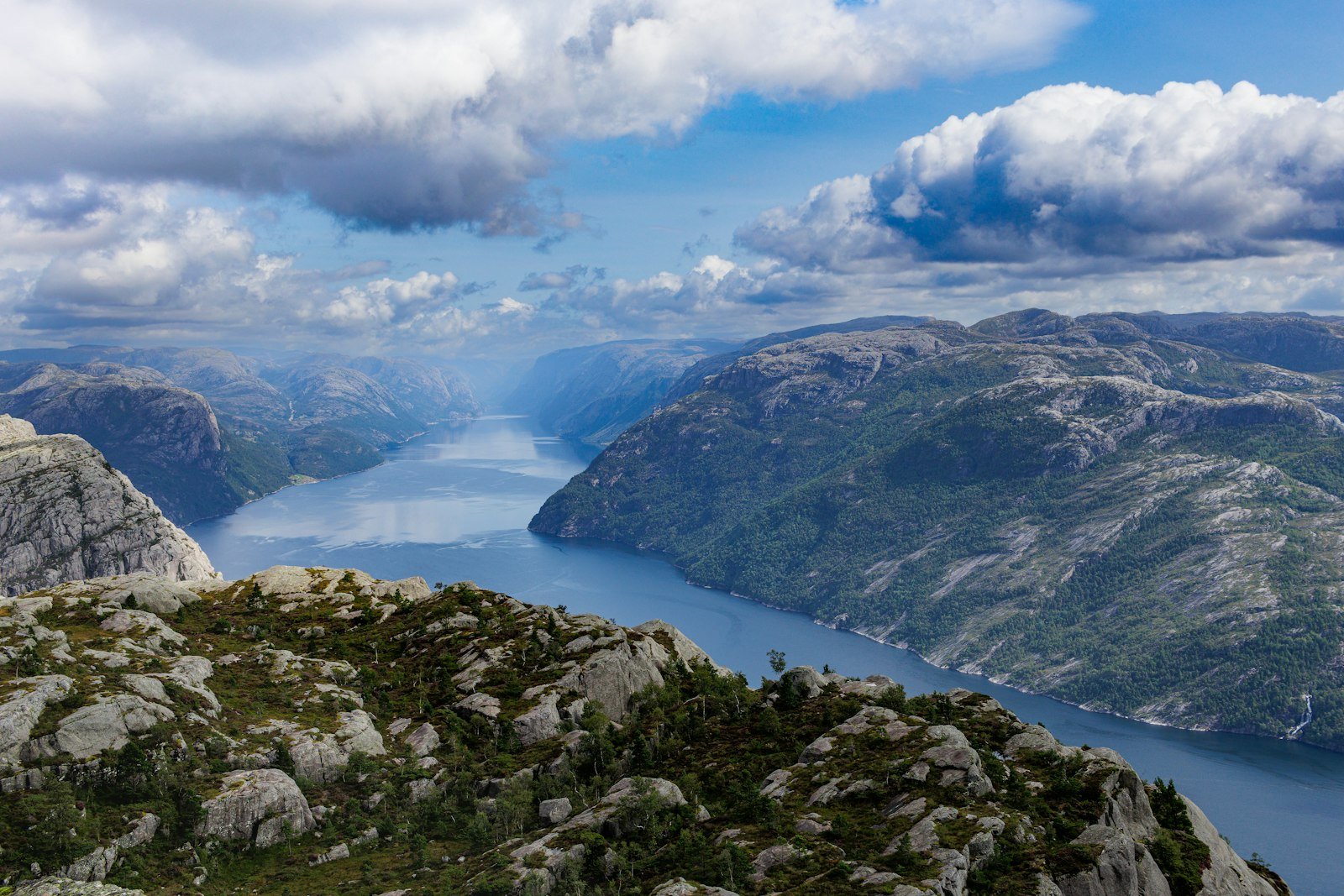
This is where Preikestolen, Trolltunga, and Kjerag live — the sea-cliff country, with a humid maritime climate, ferries between valleys, and most of Norway's tourism volume. Day-hikes are the norm. Crowds are real in July.
Jotunheimen (the central highlands)
Norway's tallest mountains, including Galdhøpiggen at 2469 m, sit in this national park. Hut-to-hut traverses are the speciality. Besseggen is here. The terrain feels closer to the Alps than anywhere else in Scandinavia.
Hardangervidda
Northern Europe's largest mountain plateau. Long, flat, treeless, weather-exposed. Multi-day crossings between cabins are a rite of passage. Reindeer outnumber people.
Lofoten and the north
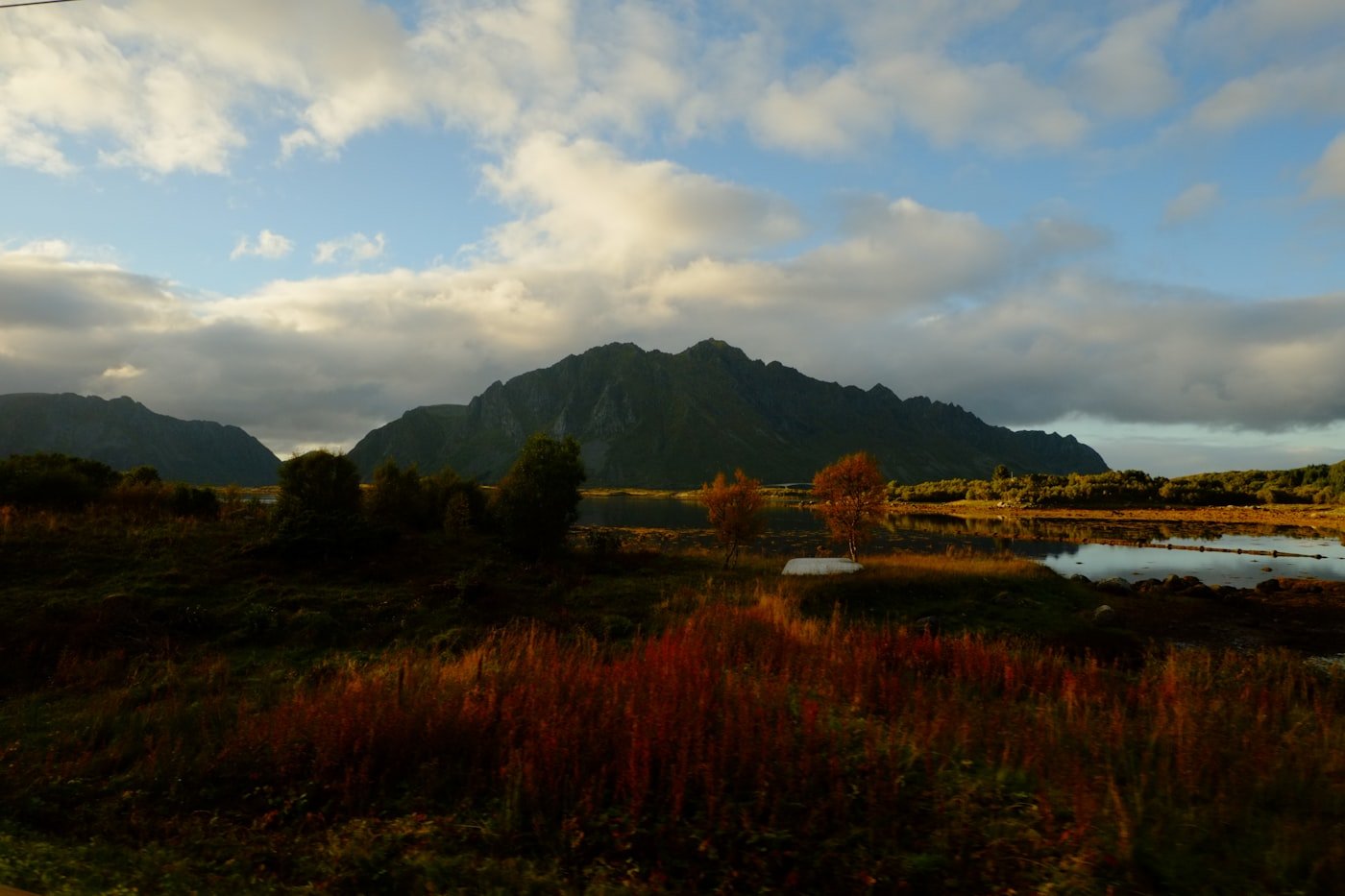
Sharp coastal peaks rising straight from sea level, midnight sun in summer, polar night in winter. Reinebringen, Ryten, and the Lofoten Trail are signature routes. The drive matters as much as the walk.
Finnmark and the Arctic
Sami country, low rounded mountains, and a season that closes in late August. Less hiked, more remote, harder weather. We don't have anything from up here yet — we're working on it.
What we haven't covered yet
We're a small site. The list of trails and guides above grows every couple of weeks. If a route or topic isn't here, it's not because we don't think it's important — it's because we haven't walked it recently or written it well. Trolltunga, Kjerag, Lofoten, and the Hardangervidda crossings are next in the queue.
This page is the hub for everything we publish about Norway. New articles are added inline as they're written. Last updated May 2026.