Shelter · Norway
DNT cabins - how Norway's hut system actually works
Norway has 550+ huts you can sleep in across the mountains, run by the Norwegian Trekking Association. Here's how the membership, key, payment, and reservation system works in practice.
Published May 4, 2026 · Last updated May 4, 2026 · researched
The Norwegian Trekking Association (DNT) operates more than 550 cabins across Norway. Anyone can use them, but to unlock most of them you need a DNT membership and a standard DNT key. Once you have those, you can walk between huts for weeks across the country, paying a per-night fee that’s often less than a hostel.
This page explains the three cabin categories, the key, the payment system, and the etiquette that keeps the network running.
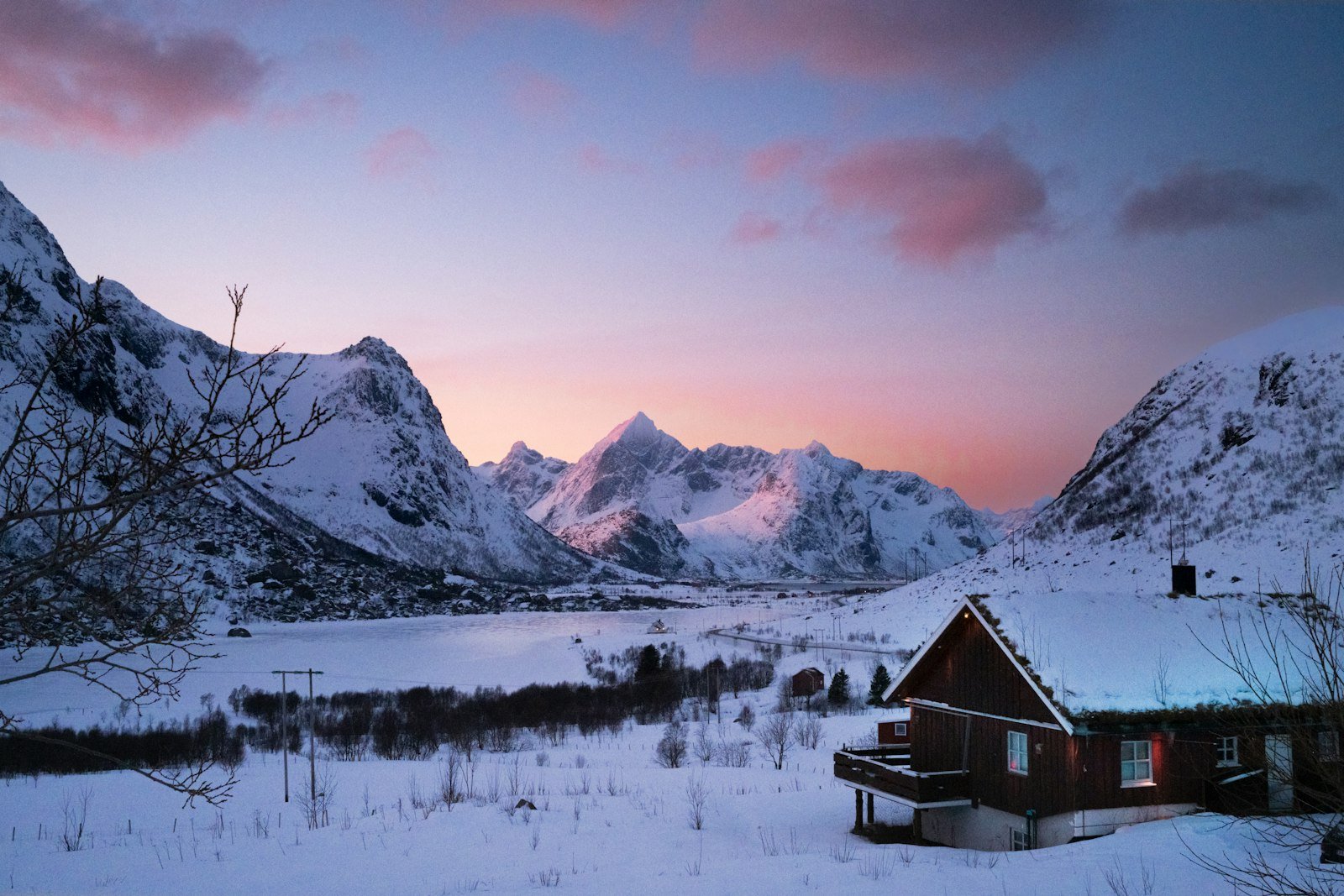
Photo: Hans on Unsplash.
The three cabin categories
| Category | What you get | Per-night cost (DNT member) | What to bring |
|---|---|---|---|
| Staffed (betjent) | Bed, full board: dinner, breakfast, packed lunch | ~1100 NOK including meals | Personal kit; sleeping bag liner only |
| Self-service (selvbetjent) | Bed, kitchen, stocked food pantry (bring cash/payment) | ~400 NOK + food at posted prices | Sleeping bag liner; clothes; you cook |
| No-service (ubetjent) | Bed, kitchen, mattresses - no food | ~300 NOK | All your food + sleeping bag liner |
Sleeping bag liners (called lakenpose or just “liner”) are mandatory in every cabin. The cabin provides duvets and pillows; you provide the layer between you and them. Buy one in any DNT shop or outdoor store before your first hut.
How to use a self-service cabin
This is the format most multi-day hikers spend their nights in. The drill:
- Arrive, sign the guest book, and find an unclaimed bed
- Cook with the food in the pantry - pasta, sauce, tinned fish, dried meat, coffee - and your own additions
- Record what you took on the price list
- Pay at the end of your stay - bank transfer, Vipps (Norwegian payment app), or by card if a terminal is available; some remote cabins still take cash
- Clean before you leave: do the dishes, sweep, replace firewood, leave it the way you’d want to find it
- Lock up behind you (DNT key)
If the cabin is full, you sleep on the floor - never turn anyone away. This is rule number one and predates the formal system by about a century.
The DNT key
The standard DNT key opens roughly 90% of self-service and no-service cabins, plus the door to the food pantry.
- Buy at any DNT office, staffed cabin, or via dnt.no
- Cost: ~100 NOK deposit (refundable) plus a small annual fee
- Lose it: report immediately - the key is the same across the country and a lost one is a small security problem
A few cabins (especially regional clubs outside DNT proper) use different locks. Check the route description before you go.
Membership and pricing
Non-members can use cabins, but pay roughly double the per-night rate and cannot easily buy the key. For most visitors who plan more than two overnights, membership pays for itself.
| Membership tier | Annual fee (2025) | Who it’s for |
|---|---|---|
| Adult | ~830 NOK | One person |
| Youth (19-26) | ~620 NOK | One young adult |
| Family | ~1300 NOK | Two adults + children under 18 |
| Visitor (short-term) | ~290 NOK / month | Tourists not in Norway long enough to renew |
Membership is purchased online at dnt.no/innmelding and active immediately.
Reservations: when, why, and where you can’t
Most self-service cabins cannot be reserved. You walk in, you find a bed, you sleep. If it’s full, you sleep on the floor or the next group makes room.
Staffed cabins in summer often book out - Rondvassbu, Gjendebu, Memurubu, and Trolltunga’s nearby cabins are particularly popular. Book through dnt.no up to a year ahead for July dates.
In winter, a few cabins are bookable to manage avalanche-risk traffic flow. Check the route plan.
Common questions
Can I bring a dog?
Some cabins allow dogs in a designated hund-rom (dog room). Many do not. Check the cabin’s individual page on ut.no before you plan. Dogs must be on lead 1 April - 20 August anywhere on Norwegian trails.
Can I just camp next to a cabin and use the toilet?
Camping in the immediate area is generally fine (allemannsretten applies), but using the cabin facilities - toilet, water, kitchen - without paying is not. Pay the full or reduced fee, or carry your own setup completely.
What if I don’t speak Norwegian?
Most cabin instructions are bilingual (Norwegian + English) and the staff at staffed cabins speak excellent English. Self-service cabins have signs in both languages, and the guest book is read in many tongues.
What’s the food in the pantry like?
Functional, hearty, calorie-dense, well-stocked. Expect: pasta, dried meat (spekemat), tinned fish, soup mixes, hard cheese, hardtack, coffee, sugar, oatmeal, dried fruit. Many cabins have powdered milk and basic spices. You won’t go hungry; you also won’t be excited about dinner.
How safe is the cabin from bears, weather, locals?
Norway has very few bears, almost all in remote eastern forests. Cabins are weather-rated for what their region throws at them. Local courtesy is the glue: in 100 years of running this system DNT have never advertised that strangers cannot stay. They have not needed to.
Worth knowing before you go
- Plan for 4-5 hours between cabins, not maps’ “fastest line.” Norwegian trail times include weather and terrain reality.
- The colour of the T-marking matters. A red T means a summer trail. A blue T means a winter ski route - the path is over, not around, hazards.
- Cabins fill in this order during peak July: staffed → self-service near roads → self-service deep in the country → no-service. If you see full at sign-up time, walk one cabin further.
- Bring small denomination cash if the cabin is remote. Card terminals fail in cold weather more often than the cabins do.
Sources: DNT cabin overview, the cabin catalogue at ut.no, and DNT’s annual report.
Keep reading
- Allemannsretten — the right-to-roam rules that apply when you’re walking between cabins
- The best time to hike in Norway — which months cabins are staffed, self-service, or closed
- Preikestolen — a day-hike that doesn’t need the cabin system, but uses a similar trailhead bus network
- Hiking in Norway: the complete guide — the hub