Rules & regulations · Norway
Allemannsretten - Norway's right to roam, explained
Norway lets you walk, swim, camp, and forage on uncultivated land - even when it's privately owned. Here's exactly what you can and can't do, where, and for how long.
Published May 4, 2026 · Last updated May 4, 2026 · researched
Yes - you can wild-camp, swim, walk, and pick berries on most uncultivated land in Norway, even when it’s privately owned. This is allemannsretten (“the everyman’s right”), codified in the 1957 Outdoor Recreation Act (Friluftsloven) and treated as a near-constitutional principle.
The catch: the rules are precise about uncultivated (utmark) versus cultivated (innmark) land, distance from buildings, and how long you can stay. This page is the short version - what’s legal, what isn’t, and where the edge cases bite.
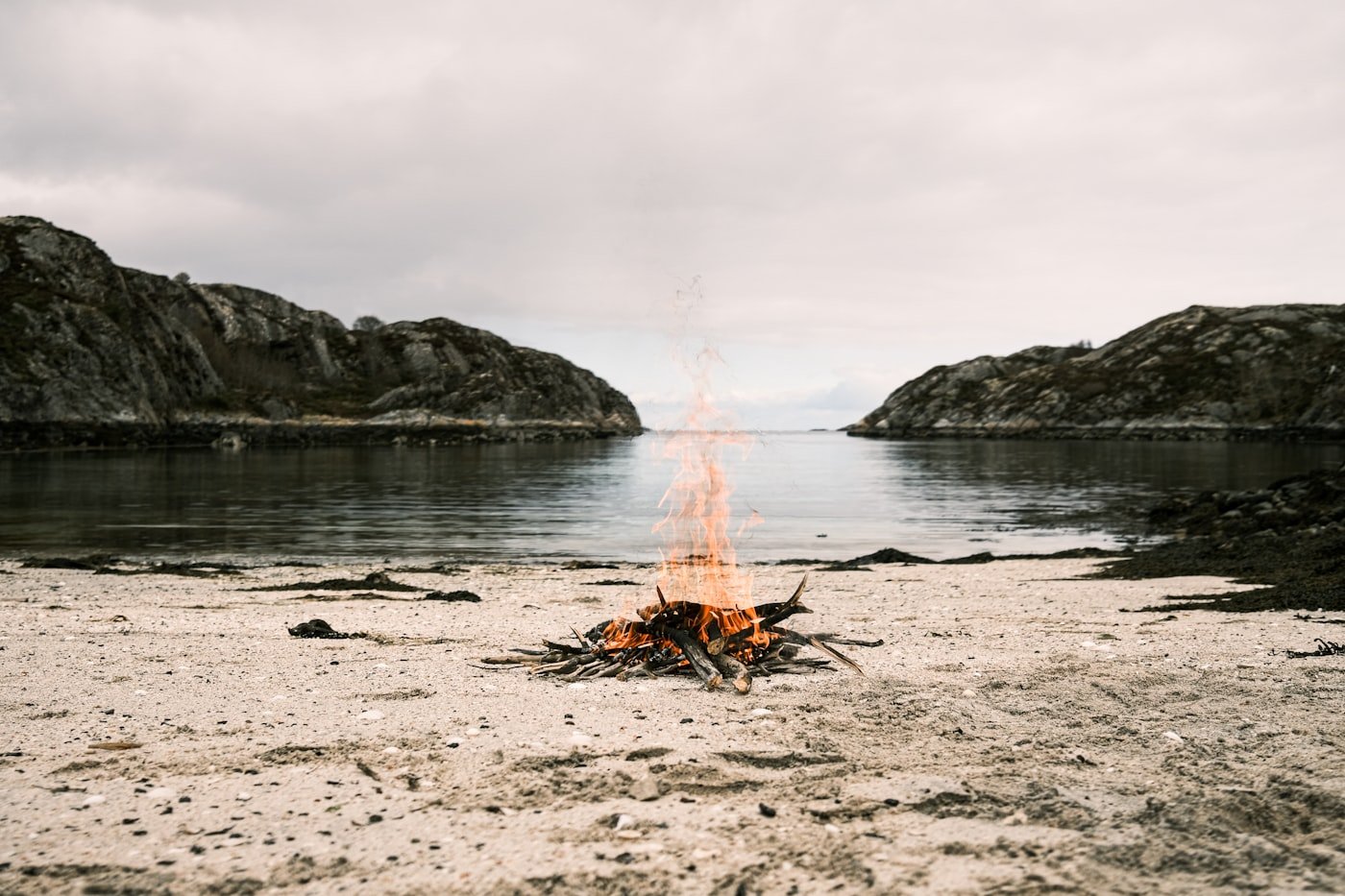
Photo: Hasse Lossius on Unsplash.
What you can do (free, no permission needed)
- Walk and ski across uncultivated land
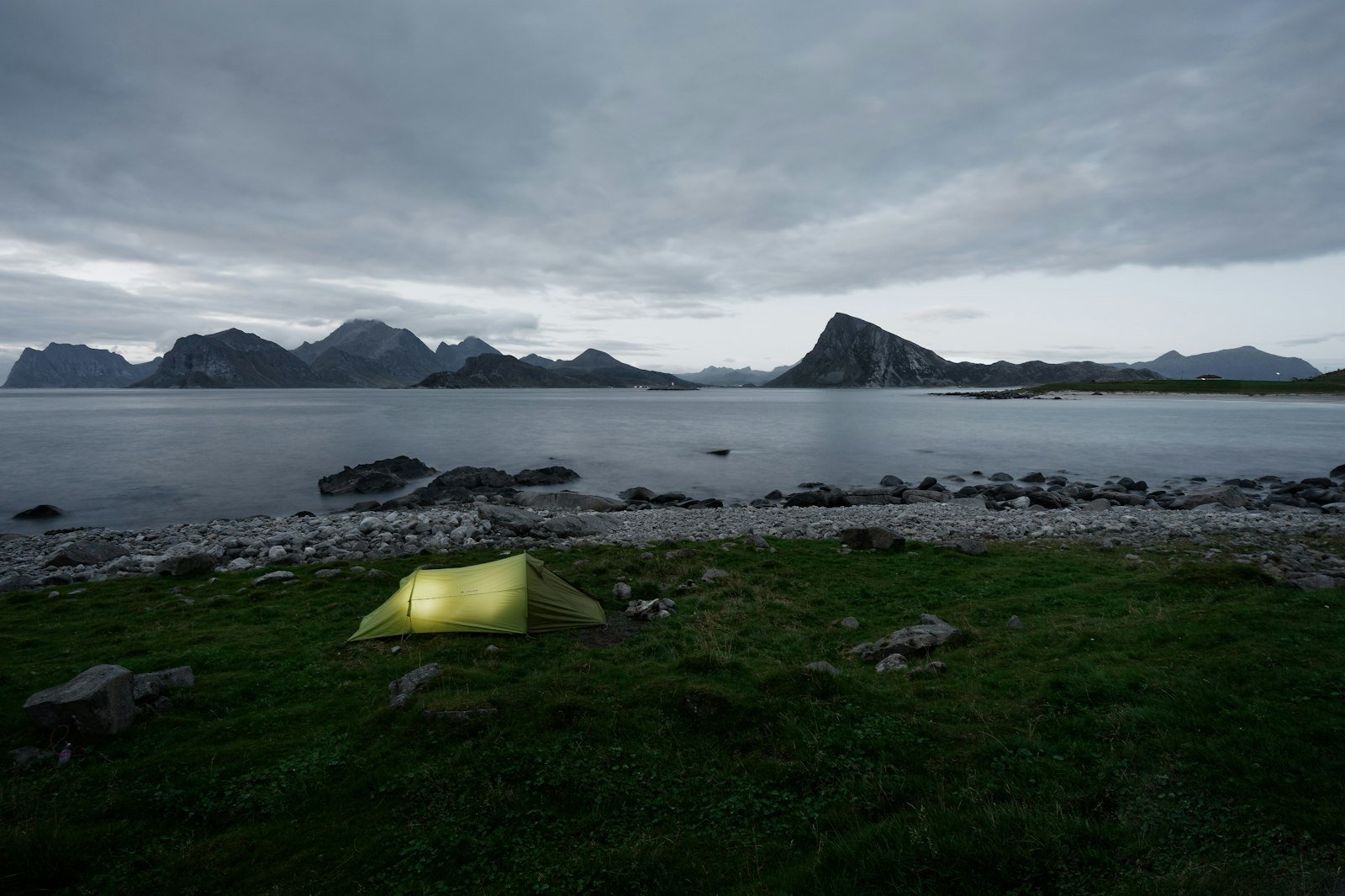
- Wild-camp for up to two nights in the same spot
- Swim and paddle in lakes, rivers, and along the coast
- Pick wild berries, mushrooms, and most flowers
- Fish in the sea (saltwater) without a licence; freshwater needs a permit
- Light a fire on bare rock or beach - but not in or near a forest from 15 April to 15 September
What you can’t do
- Cross or camp on cultivated land (innmark) without permission - this includes fields under cultivation, fenced pasture, gardens, and the area within 150 metres of an inhabited house or cabin
- Drive a motor vehicle off public roads (except on roads designated for motor traffic)
- Damage trees, fences, gates, or other property
- Leave litter - pack out everything, including biodegradables
- Make a fire in or near forest during fire season (15 April - 15 September), even if it’s “your” wood
The 150-metre rule
This is the rule most visitors get wrong. You must camp at least 150 metres from the nearest inhabited house or cabin. If you can see a lit window, you are too close. The rule applies in both directions: a hytte counts the same as a permanent home.
In open mountain country well above the tree line, this is rarely a problem. On coastal or fjord-side trails it is - pitch carefully and walk further than you think you need to.
How long can you camp in one spot?
| Setting | Default | Where it’s longer |
|---|---|---|
| Most areas | 2 nights | The third night requires permission from the landowner |
| Open mountain country, well away from cabins | No limit in practice | This is custom, not statute - be reasonable, leave no trace |
| National parks | Park-specific rules apply | Some parks restrict camping zones; check signs at entry |
Cultivated vs uncultivated land
The legal line:
- Innmark (cultivated): farmyards, fields under crop, fenced pasture, gardens, plantations, and the immediate area around houses and cabins. No allemannsretten - get permission.
- Utmark (uncultivated): everything else - forests, mountains, moors, bog, beaches, rocky shoreline. Allemannsretten applies.
A meadow that has been mowed for hay is innmark from May to harvest. The same meadow in winter, under snow, is utmark. The land’s status changes with use.
Dogs
Dogs must be on lead from 1 April to 20 August anywhere in Norway, to protect ground-nesting birds and grazing livestock. Some municipalities extend this; check signs locally. Outside these dates, dogs can be off-lead in most places - but you remain responsible for what they do.
Common questions
Can I camp on the beach?
Yes, on uncultivated coastline, with the 150-metre rule and the two-night limit applied. Many of Norway’s most photographed wild-camping spots - Lofoten especially - are perfectly legal.
Can I light a campfire to cook?
A small, contained fire on bare rock or sand is allowed year-round. From 15 April to 15 September, fires are banned in or near forest, regardless of recent rain. Use a stove instead.
Can I drive my van and sleep in it on a forest road?
Public access does not grant driving rights. You can park where the road authority allows and sleep in the vehicle, but you cannot drive off-road on private forestry roads without permission. Many forest roads have signs explicitly forbidding traffic.
Does allemannsretten apply in Sweden and Finland?
Both countries have similar (slightly more permissive) rights, called allemansrätten and jokamiehenoikeus. Iceland and Denmark have weaker versions - get specific advice if you’re crossing borders.
Can I be fined for getting it wrong?
Yes - for fires during fire season, for off-road driving, and for damaging property. Fines for innocent camping mistakes are rare; fines for repeat offenders or for litter are not.
The principle behind the rule
Allemannsretten exists because Norwegians decided, formally in 1957 and informally for centuries before, that access to nature is a basic part of life. The rule survives because most people honour it. Pack out your litter, camp out of sight, douse your fire, and you’ll keep the right alive for the next person who walks through.
Sources: Lov om friluftslivet § 1-10, the Norwegian Environment Agency (Miljødirektoratet), and the Norwegian Trekking Association (DNT).
Keep reading
- DNT cabin system — how Norway’s mountain hut network works alongside wild-camping rights
- The best time to hike in Norway — when each season is legal-and-pleasant for wild-camping
- Preikestolen — applying allemannsretten on a real trail
- Hiking in Norway: the complete guide — the hub