Planning
Hiking Training Plan for Multi-Day Hikes - 12 Weeks from the Couch
A 12-week hiking training plan for multi-day hikes: how to build legs, lungs, and back for 6 days of 20 km/day. Covers hiking strength training, cardio, and weighted pack sessions.
Published May 7, 2026 · Last updated May 7, 2026 · researched
Most multi-day hikes that fail at km 30 fail because the hiker trained for the wrong thing. Treadmill cardio doesn’t prepare you for descents. Squats don’t prepare you for a 12-kilo pack. Running once a week doesn’t prepare you for six consecutive days of effort. The mountain doesn’t reward general fitness; it rewards specific fitness, built over weeks.
This is a 12-week plan we’d give a friend with a 6-day hike on the calendar. Adjust by what you currently can do.
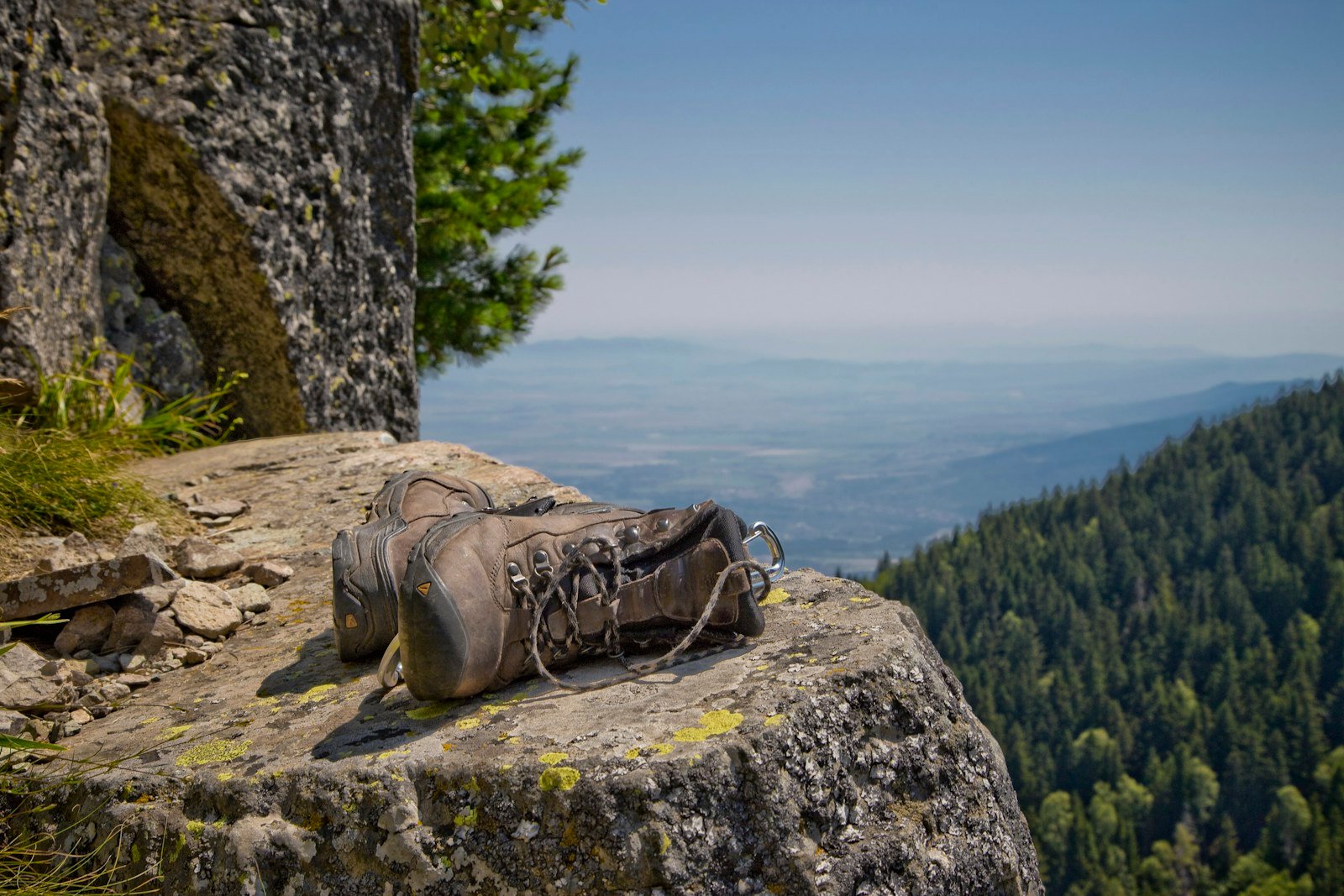
Photo: Vlad Tchompalov on Unsplash.
What you’re actually training for
A typical 6-day multi-day hike demands:
| System | What it has to do | How to train it |
|---|---|---|
| Legs (slow-twitch endurance) | 20 km/day for 6 days under load | Long weekly walk with weighted pack |
| Quads (eccentric strength) | Long descents on tired legs | Step-downs, downhill running |
| Back and core | Carry 12-18 kg for 8 hours | Pack walks + back exercises |
| Cardiovascular | Steady effort for 6+ hours, recover overnight | Zone 2 cardio (talkable pace) |
| Feet | 20 km on uneven ground without blistering | Same boots and socks for every training session |
| Mental | Continue when you don’t want to | Long walks in bad weather |
If your training only hits one of these, the others will quit on day 3 of the hike.
The 12-week plan
The plan assumes you can currently walk 5 km comfortably. If not, add 4 weeks of base building before week 1.
Weeks 1-4: Base building
| Day | Activity | Notes |
|---|---|---|
| Mon | Rest or 30 min walk | Active recovery |
| Tue | 45 min Zone 2 cardio (run, bike, row) | Talkable pace |
| Wed | 30 min strength (legs, core, back) | See exercise list below |
| Thu | 60 min walk, no pack | Easy effort |
| Fri | Rest | |
| Sat | Long walk: 8-12 km, no pack, hilly if possible | Build to 12 km by week 4 |
| Sun | 30 min easy bike or swim | Recovery |
Goal by end of week 4: Walk 12 km in hilly terrain in under 3 hours, finish feeling tired-not-shattered.
Weeks 5-8: Pack building
Now add weight to your long walk, gradually.
| Day | Activity | Notes |
|---|---|---|
| Mon | Rest or 30 min walk | |
| Tue | 60 min Zone 2 cardio | |
| Wed | 40 min strength | |
| Thu | 60-75 min walk with 6-8 kg pack | The pack starts now |
| Fri | Rest | |
| Sat | Long walk: 15-18 km with 8-10 kg pack | Build distance + weight |
| Sun | 45 min easy bike or swim |
Goal by end of week 8: 18 km with 10 kg pack on hilly terrain, in under 4.5 hours, in your hike boots.
Weeks 9-11: Specificity
Now train exactly what the hike demands. If your hike is 20 km/day with 12 kg, do that. If it has 800 m of climbing per day, find the hill.
| Day | Activity | Notes |
|---|---|---|
| Mon | Rest | |
| Tue | 75 min Zone 2 with light pack | |
| Wed | 45 min strength + plyometric (jumps, step-downs) | |
| Thu | 90 min walk with full pack, including one long descent | |
| Fri | Rest | |
| Sat | Back-to-back day 1: 18 km with full pack | |
| Sun | Back-to-back day 2: 12 km with full pack on tired legs | This is the key session |
| Mon (week 12) | Rest |
Goal: Two consecutive days of full-pack walking with no injury and recoverable fatigue.
Week 12: Taper
Cut volume by 50%. Keep intensity moderate. Eat well, sleep more, do not “test yourself” in the final week - there is nothing to gain and a tweaked ankle to lose.
The four exercises that matter
Skip the gym fitness influencer routines. These four are the ones that translate directly:
1. Reverse lunge
3×10 each leg, slow.
Builds the eccentric quad strength that protects your knees on descents. Most hiking-failures-by-knee come from quads that quit on day 3.
2. Single-leg deadlift
3×8 each leg, with a kettlebell or dumbbell.
Trains the posterior chain (glutes, hamstrings, lower back) to hold your spine straight under a loaded pack. Most “the pack hurts my back” problems are actually weak glutes.
3. Step-down (eccentric)
3×8 each leg, on a 30 cm step. Slow descent, fast ascent.
Specifically trains the muscles that fire on every single downhill step. There is no substitute.
4. Loaded carry (farmer’s walk)
3×60 seconds with two heavy weights or one weighted pack.
Trains the trapezius, lats, and core to hold up a pack for hours. Most “shoulders ache” complaints are weak trapezius muscles.
Common training mistakes
Training only on flat ground
If your hike has 800 m of climbing per day, train hills. A 1-hour walk on flat sidewalks is not equivalent to 1 hour going up and down 50 m repeatedly. Find the hill.
Skipping the descent training
Descents are where injuries happen and where untrained legs collapse first. Walk down hills. Run down hills if you can. The eccentric loading on the quads is what builds resilience.
Doing too much, too fast
The big risk in a 12-week plan is increasing distance + weight + speed all at once. Pick one variable to increase per session. Distance one week. Weight the next. Speed only when both feel easy.
Training in different boots
Train in the boots you’ll wear on the hike. If the boots are new, break them in for at least 80 km on training walks before the hike. Blisters from new boots are 100% avoidable and 100% trip-ending.
Skipping back-to-back days
The single most predictive training session is two consecutive long walks. If you can do 18+12 km with a pack two days in a row, six days at 20 km is in reach. If you can’t, it isn’t, no matter how fit you feel after one day.
How to know if you’re ready
Two weeks before the hike, do a dress rehearsal weekend:
- Saturday: walk the average daily distance with full pack
- Sunday: walk 70% of that, on tired legs
Finish both? You’re ready. Crawl back into the car on Sunday afternoon? Defer the hike, or shorten it.
This is the only test that tells the truth.
Keep reading
- Rain shells for hiking - staying dry on training walks
- The best time to hike in Norway - when to time the dress-rehearsal weekend
- Hardangervidda crossing - the kind of trail this training is for
- First aid for hikers - what to do when training (or the hike) doesn’t go as planned