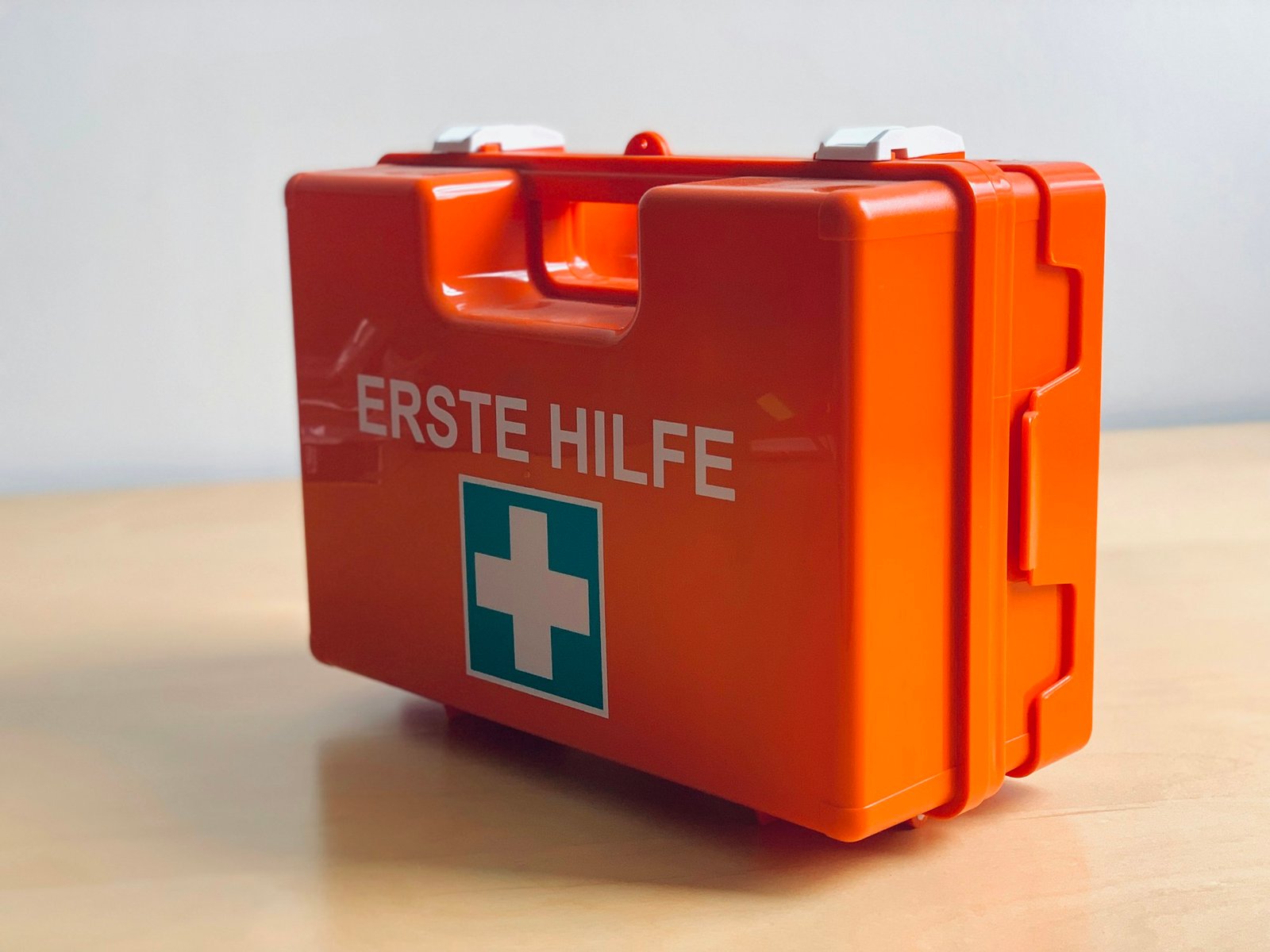
First aid
Hiking Medical Kit and First Aid - What to Carry and What to Do
Your hiking medical kit fits in a 200-gram pouch. What goes in it (camping first aid kit essentials), what doesn't, and the field protocol for the five most common hiking injuries.
Published May 7, 2026 · Last updated May 7, 2026 · researched
Most hiking injuries are predictable: blisters, sprains, cuts, dehydration, and hypothermia. A 200-gram first-aid pouch and 30 minutes of knowing what to do solves 95% of them. The other 5% need professional help and a phone signal - there is no kit that replaces those.
This page is the short version: a kit list that fits in a fist, and a one-page protocol for the five most common field problems.
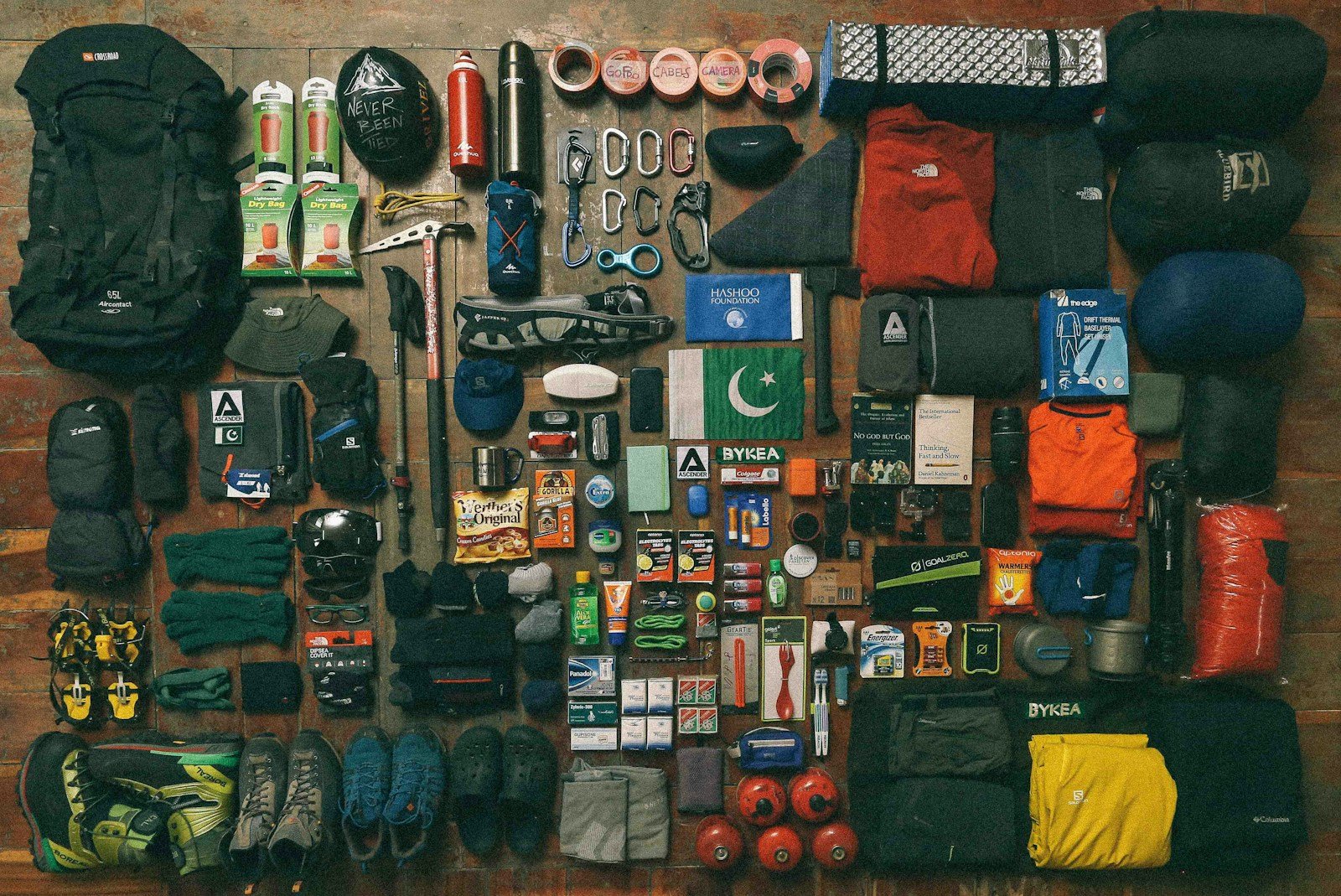
Photo: Muhammad Masood on Unsplash.
The 200-gram kit
| Item | Weight | What it solves |
|---|---|---|
| 4× large adhesive dressings (Compeed-style) | 5 g | Blisters in progress |
| 1× sterile non-adhesive dressing 10×10 cm | 10 g | Larger cuts, abrasions |
| 1× crepe bandage 7.5 cm | 30 g | Sprains, holding compresses |
| 4× alcohol prep wipes | 8 g | Wound cleaning |
| 1× small roll of athletic tape | 25 g | Strapping, splinting |
| 1× pair nitrile gloves | 5 g | Hygiene, blood handling |
| 1× tweezers | 8 g | Splinters, tick removal |
| 1× small scissors | 10 g | Cutting tape, clothing |
| 6× ibuprofen 400 mg | 5 g | Pain, swelling |
| 6× paracetamol 500 mg | 5 g | Pain (alternates with ibuprofen) |
| 4× antihistamine | 2 g | Allergic reaction, sting reaction |
| 1× emergency space blanket | 60 g | Hypothermia, shock |
| 1× whistle | 10 g | Signal for help |
| Total | ~180 g |
This fits in a sandwich-bag-sized pouch and lives at the top of your pack, not the bottom.
What’s NOT in the kit (and why)
- No tourniquet. Tourniquets are critical kit for trauma medics, and cause more harm than good in untrained hands. If you’re trained, carry one. If not, direct pressure stops 99% of survivable bleeds.
- No splints. Trekking poles, foam pads, and tape make field splints. Adding rigid splints to the kit doubles its weight without doubling its capability.
- No prescription drugs unless they’re yours. Painkillers stronger than ibuprofen, antibiotics, and opioids should not be given to others - even with the best intent.
Five most common scenarios
1. Blister forming
Signs: Hot spot on the heel or toe, especially at km 4-6.
Action:
- Stop now. Do not wait for the next break.
- Clean the skin with an alcohol wipe.
- Apply a Compeed-style dressing or athletic tape covering the hot spot + 2 cm of skin around it.
- Adjust the boot lacing - too loose at the heel is the most common cause.
If the blister has already formed: do not pop it. Cover with a non-adhesive dressing; pop only at camp under sterile conditions.
2. Sprained ankle
Signs: Sudden lateral pain, swelling, difficulty putting weight on it.
Action (R.I.C.E.):
- Rest - sit down, no further weight for 10 minutes
- Ice - submerge in a stream for 5 minutes if available
- Compress - wrap with the crepe bandage, firm but not constricting
- Elevate above heart level for 10 minutes
If the ankle takes weight after 30 minutes and you can walk 10 metres without sharp pain, continue slowly. If not, set up camp and reassess in the morning. Walking 5 km on a Grade 2 sprain can turn a 6-week recovery into a 6-month one.
3. Cut or abrasion
Action:
- Stop the bleeding with direct pressure for 5 minutes (do not lift to check)
- Clean with an alcohol wipe - sting briefly, very effective
- Cover with a sterile non-adhesive dressing
- Tape the dressing in place
If the cut is more than 2 cm deep, won’t stop bleeding after 10 minutes of pressure, or shows bone - it’s an evacuation, not a kit job.
4. Heat exhaustion
Signs: Headache, nausea, weakness, pale clammy skin, body temperature 38-39 °C.
Action:
- Move to shade immediately
- Remove pack and outer layers
- Cool with damp cloths on neck, wrists, groin
- Sip water with a pinch of salt and sugar (1 g salt + 1 tsp sugar per 500 ml)
- Rest minimum 30 minutes
If the person becomes confused, stops sweating, or skin goes hot and dry - that’s heatstroke. Cool aggressively (cold stream) and call for evacuation.
5. Early hypothermia
Signs: Uncontrolled shivering, slow speech, clumsy hands, “the umbles” (mumbles, fumbles, stumbles).
Action:
- Stop now. Get out of the wind.
- Replace wet clothing with dry layers - wet clothes are the enemy
- Hot drink (sweet, caffeine fine, no alcohol)
- Calorie-dense food (chocolate, dried meat, hardtack)
- Get into a sleeping bag if available
- Do not rub the skin - circulation kicks in on its own
If shivering stops and the person becomes drowsy or confused - that’s serious hypothermia. They cannot rewarm themselves. Get them inside something insulated and warm them with the body heat of others.
When to call for evacuation
Norwegian emergency number: 112 (or 113 for medical specifically). Voice over satellite if no cell signal - most modern Garmin and inReach devices have SOS buttons.
Call if any of:
- Unconscious or confused after head injury
- Bleeding that doesn’t stop with 10 minutes of pressure
- Suspected broken bone (especially leg, hip, spine)
- Severe hypothermia (no shivering + altered consciousness)
- Heatstroke (hot skin, no sweat, confusion)
- Severe allergic reaction (swelling of throat/face)
- Chest pain in someone with no history of it
- Anything that makes you genuinely afraid
The dispatcher will ask: location, what happened, who is hurt, what’s their level of consciousness, what have you done. Be brief and factual.
Limits of this guide
This is wilderness first aid for non-medical hikers. It does not replace a Wilderness First Aid (WFA) certification - the 16-hour course is the single best safety upgrade most regular hikers can make. It exists in most countries; Norway runs them through Røde Kors (Norwegian Red Cross) and DNT.
We are not doctors. If any of the above conflicts with what your training or local protocol says, follow your training.
Keep reading
- The best time to hike in Norway - weather windows that reduce hypothermia risk
- Rain shells for hiking - staying dry is the single biggest hypothermia prevention
- DNT cabin system - emergency shelter on Norwegian routes