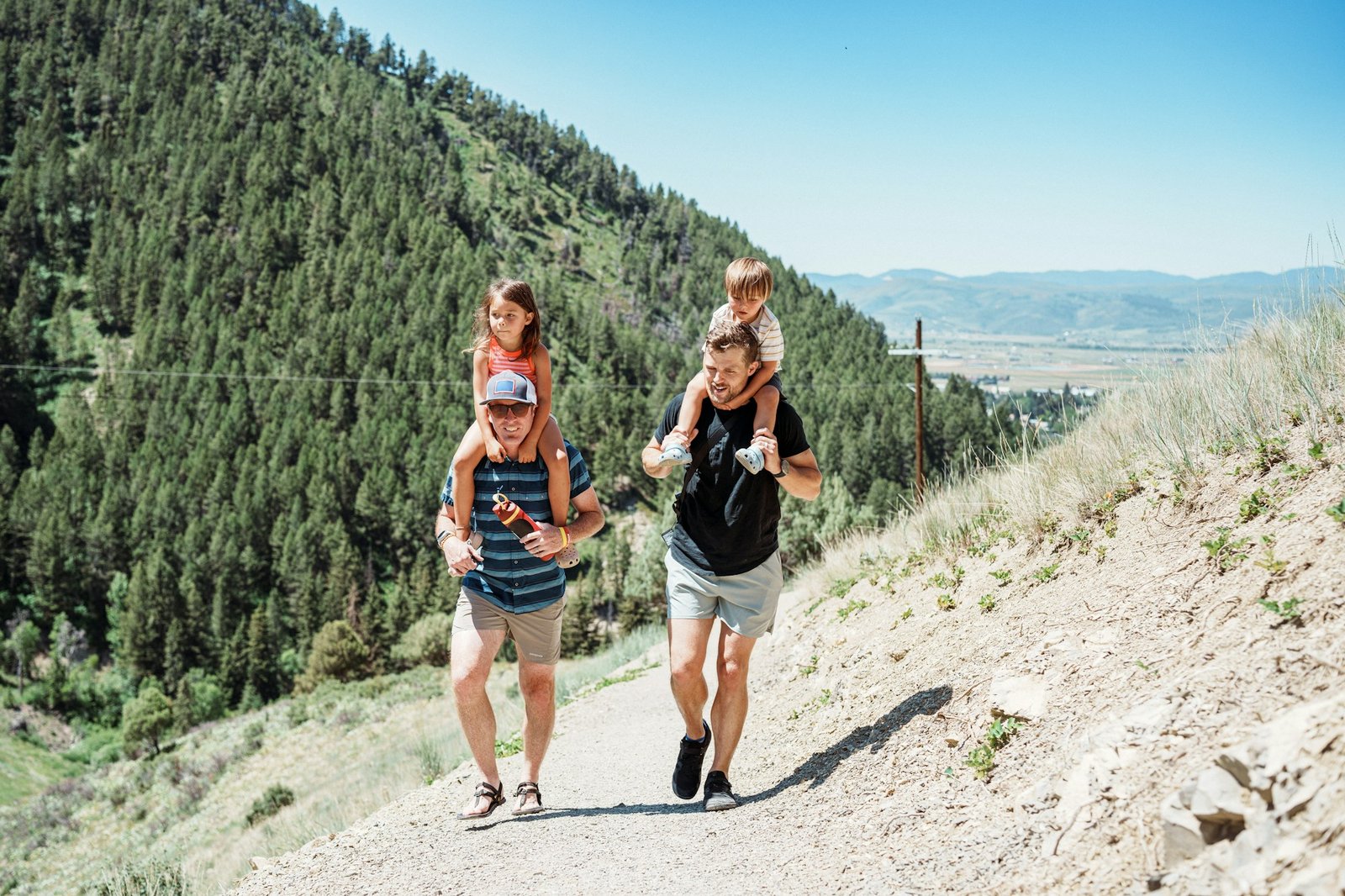
With kids
Family Hiking Guide - What Actually Works with Kids
Family hiking advice that actually works: distance by age, snack systems that prevent meltdowns, kids hiking shoes and gear, and the one rule that matters on every family hike.
Published May 8, 2026 · Last updated May 8, 2026 · researched
Most kid-hiking writing tells you what should work. This page is what actually does. Distance by age, snack timing that prevents the meltdown before it starts, gear that earns its place in a small pack, and the rule that matters most: how to turn back without making it the story your kid tells about hiking forever.
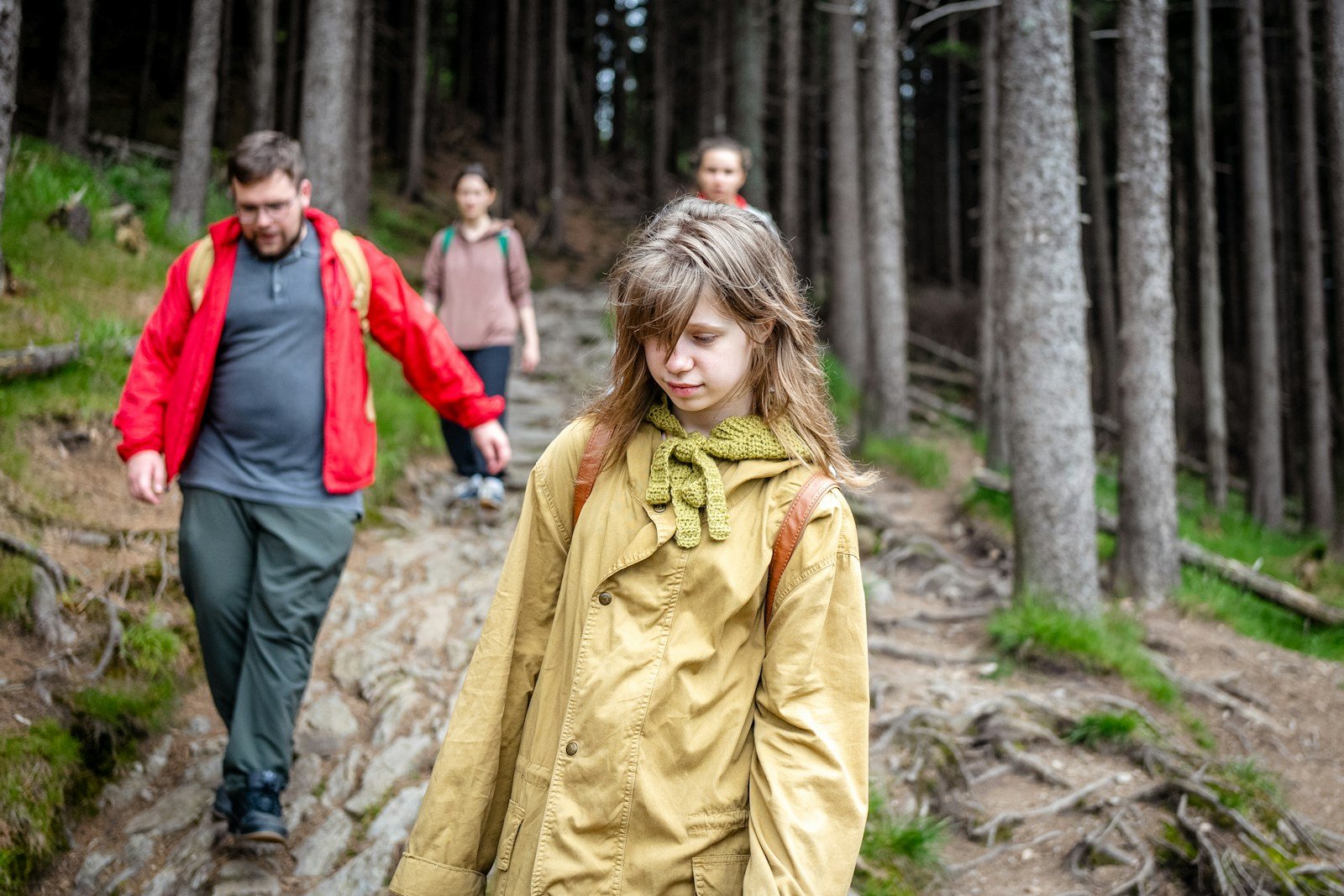
Photo: Timur Shakerzianov on Unsplash.
Distance by age - the honest table
What kids can actually walk, on real terrain, before they break:
| Age | Comfortable distance | Hard limit | Elevation tolerance |
|---|---|---|---|
| 2-3 | 0.5-1 km of walking + 5+ km in carrier | Don’t push it | Carrier handles everything |
| 4-5 | 2-3 km flat | 5 km, with a goal | 200 m gain max |
| 6-7 | 4-6 km gentle | 8 km if motivated | 300 m gain |
| 8-9 | 7-10 km | 12 km if it’s an adventure | 400 m gain |
| 10-12 | 10-14 km | 18 km on a good day | 600 m gain |
| 13+ | Adult-equivalent within reason | - | - |
Two rules that override the table:
- Match the most cautious estimate in your group. The 4-year-old sets the pace, not the 8-year-old’s energy.
- Add 30% time, not distance, to your adult-pace plan. Kids walk 60-80% of adult pace and stop more.
The snack system
The single biggest predictor of whether a hike works: food timing, not food quantity.
The rule we use:
| Time | What |
|---|---|
| 30 min before start | Solid breakfast/lunch - protein + carbs |
| Every 45 min on trail | Small snack, no exceptions |
| At km 2 (or first major view) | Stop, sit down, snack + water |
| At halfway | Bigger break, “lunch” even if it’s 10 am |
| At descent start | Sugar - chocolate, dried fruit, gummy bears |
| Within 30 min of finish | One last small thing, prevents the post-hike meltdown |
Snacks that work:
- Small dried-fruit packs - no melting, easy fingers
- Cheese cubes in a small container - protein, not boring
- Small chocolate bars - emergency morale
- Pretzel sticks - kids feel like they’re eating “snacks”, parents see calories
- A whole apple - the act of eating is part of the rest
Snacks that don’t work: anything in big shareable bags (the conflict it creates), anything sticky (paws + face), bananas (bruise in 10 minutes).
Gear
What’s actually worth carrying for a kid-hike:
For the kid
- Their own small pack (5-10 L) - gives them ownership of the day. Put their water + one snack + a small toy. Not heavy gear.
- Footwear that fits today - kids’ feet grow 2 sizes a year. Boots that worked last summer probably don’t.
- A windproof layer that’s theirs and easy to put on without help - meltdown-trigger if you have to wrestle them into yours
- A simple cap for sun + bugs
For the carrier (under 4)
- Front carrier (under ~12 kg) or hard-frame back-carrier (12 kg+). The Osprey Poco-line and Deuter Kid Comfort are the two everyone uses. Either is fine.
- Sun shade for the carrier - a melted toddler is a screaming toddler
- Snack pouch within reach - you cannot stop on a slope to dig for a cracker
For you
- Dry change of clothes for the kid (in a dry bag) - they will get wet in the first stream
- Wet wipes + small first-aid pouch - see our first-aid guide
- Distractions - small toy, magnifying glass, stickers. Use only when needed.
The turn-back rule
The rule that matters most: turn back at the first persistent complaint. Not the first whine - kids whine. Persistent means three different complaints in 10 minutes (“my legs are tired”, “I’m cold”, “I want to go home”). That’s the point at which continuing makes the hike the story instead of the day.
Practical version: pick a turn-around marker before you start (“if we’re still climbing at the bench at km 3, we turn back”). When the kid is tired, the marker has already been negotiated. No discussion.
What to skip
- Long flat fire-roads. Boring for kids; they need terrain variation to stay engaged.
- Out-and-back routes. Loops or point-to-points beat doing the same trail twice.
- Hot weather. Above 25 °C in Norway is rare but real, and kids overheat fast.
- Unannounced “real adventures”. Kids do adventures when prepared, not when surprised.
Trails that work in Norway
| Trail | Age | Why |
|---|---|---|
| Preikestolen (8 km, trail page) | 8+ confident kids | Wide path, dramatic ending, lots of breaks |
| Reine to Bunes Beach (4 km flat + ferry) | 5+ | Beach goal, ferry adventure, no climb |
| Vøringsfossen viewpoint (1 km) | 3+ | Real waterfall, minimal walk |
| Lofotr Viking Museum + walk (varies) | 5+ | Combines history + outdoor |
| DNT family-friendly cabin walks | 4+ | DNT publishes age-rated routes |
What to avoid with kids: Trolltunga (too long), Galdhøpiggen (too high), any glacier route, exposed ridge walks like Besseggen.
Common questions
When can a kid start carrying their own pack?
Around 4. Start with 1 kg max (water + snack + small toy). Increase by 0.5 kg per year of age. By 10, kids can carry 4-5 kg.
What about overnight cabin hiking?
DNT cabins work great with kids age 4+. Self-service cabins are a hit (“we cook our own pasta!”). Multi-night requires age 6+ and a kid who’s already done day-hikes successfully.
Is wild camping with kids legal in Norway?
Yes - allemannsretten applies. The 150 m rule from buildings still holds. Choose an open spot the kids can run on, not deep forest.
Norway-specific stuff?
- Pack rain gear even on sunny days. The weather flips faster than kids can process it.
- Norwegian kid-hiking culture is strong - your kid will see other kids on the trail and copy them. This works in your favour.
- Mosquitoes are real June-August in inland forests. Head nets for kids exist; many don’t tolerate them. Pick coastal trails in mosquito season.
What’s the single most important thing?
Snacks, on time, every time. A fed child walks. A hungry one will not.
Keep reading
- Best time to hike in Norway - kid-friendly weather windows
- First aid for hikers - what to carry for kid-specific emergencies
- Preikestolen - the iconic kid-friendly Norwegian day-hike
- Hiking in Norway: the complete guide - the hub