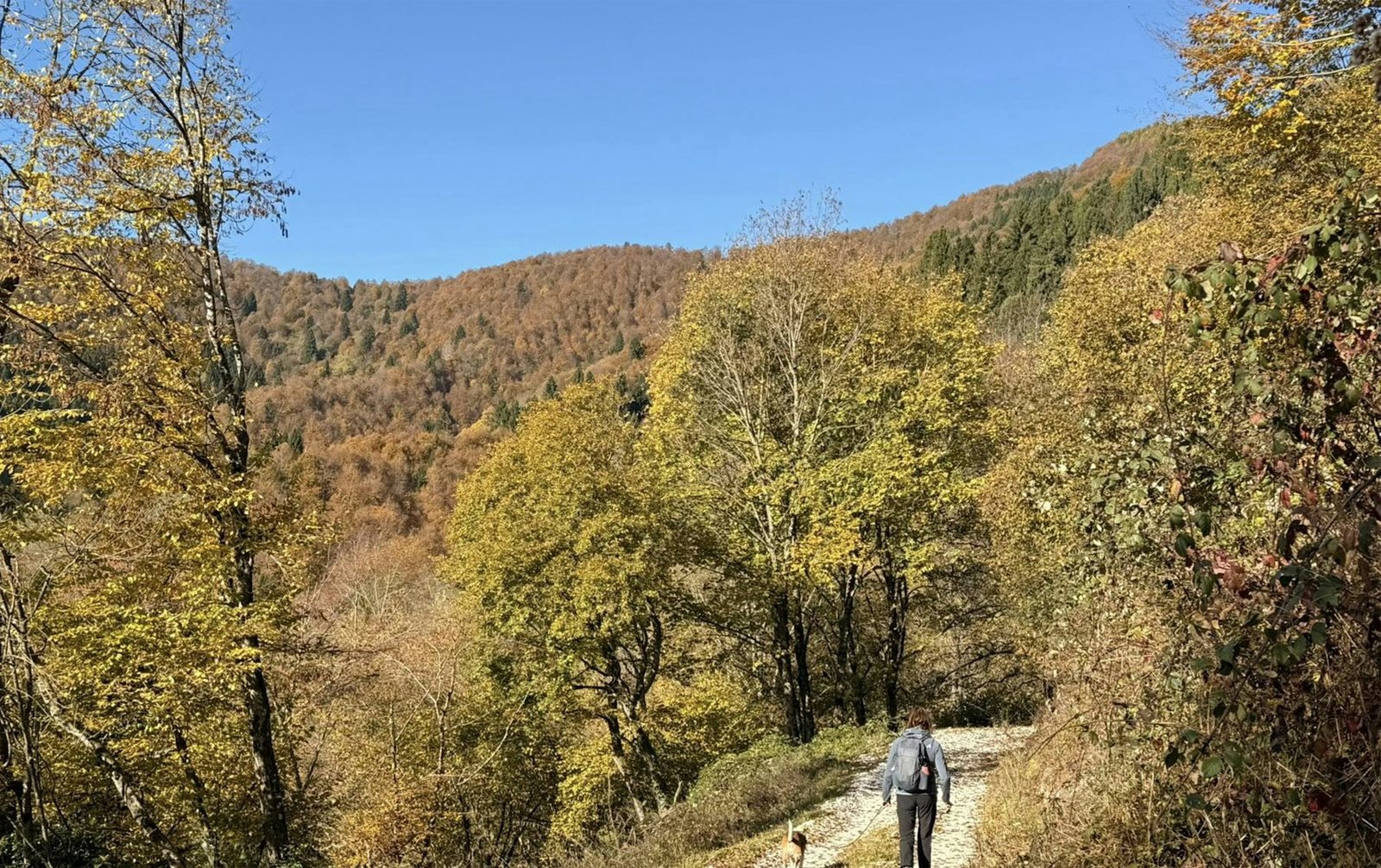
With dogs
Hiking with Dogs - Trail Safety, Paw Care, and Leash Rules
Hiking with dogs guide: dog-friendly hiking trails, paw care, water planning, heat limits, and Norway's leash law. Practical tips for day hikes and multi-day trips with your dog.
Published May 8, 2026 · Last updated May 8, 2026 · researched
Hiking with a dog is mostly about three things: managing their feet, managing their water, and managing the leash. Get those right and 90% of dog-trail problems disappear. Get them wrong and the hike ends early - sometimes badly.
This page is the practical version, with special attention to Norwegian leash law (which is stricter than most visitors expect).
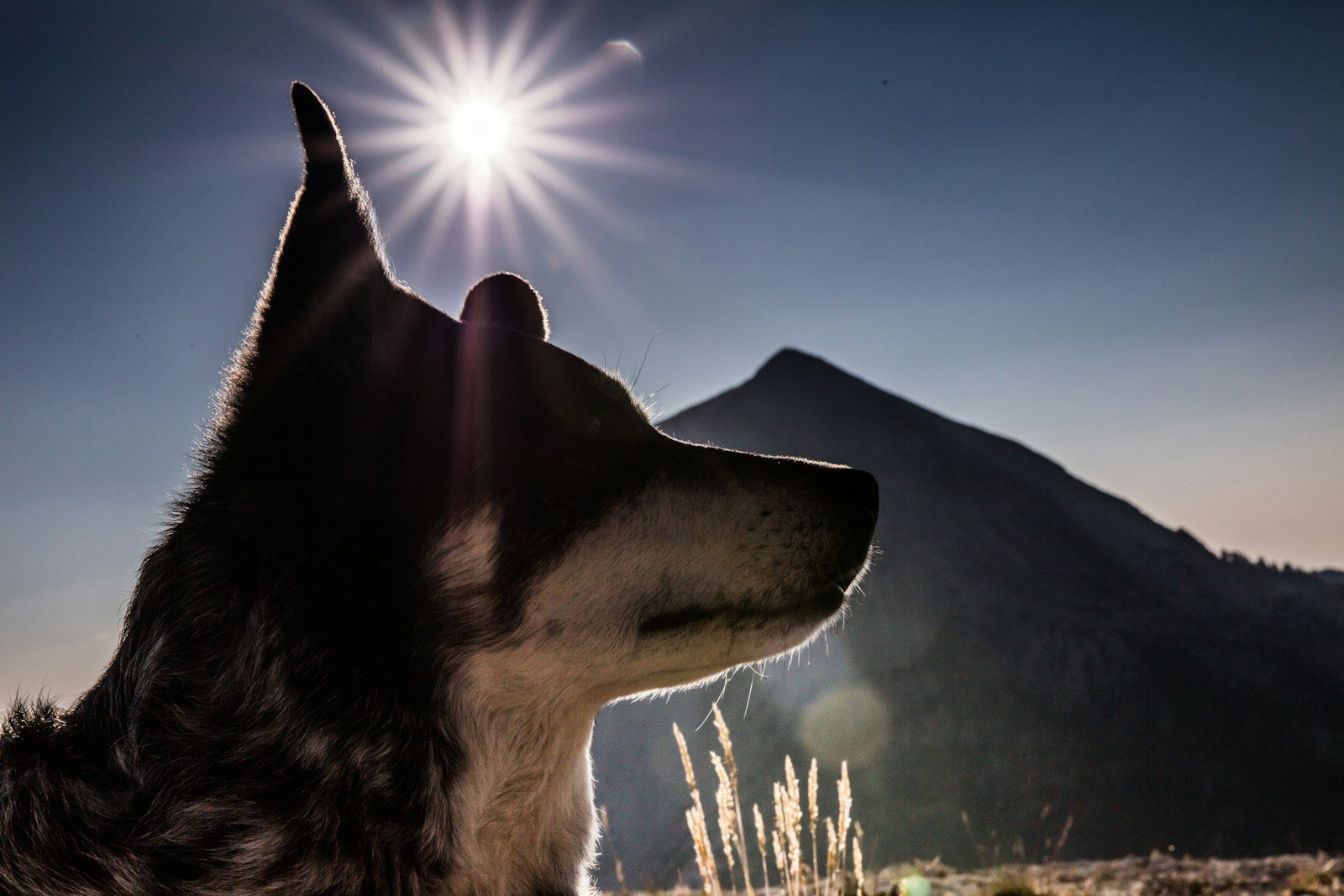
Photo: Patrick Hendry on Unsplash.
Norway’s leash law - read this first
Dogs must be on lead from 1 April to 20 August anywhere in Norway. This is the båndtvang, set in the Dog Act (Hundeloven) and enforced everywhere - fjord trails, mountain plateaus, coastal walks, and inside national parks. Some municipalities extend it.
What this means in practice:
| Period | Rule |
|---|---|
| 1 Apr - 20 Aug | Lead, everywhere, no exceptions for “well-behaved” dogs |
| 21 Aug - 31 Mar | Off-lead OK in most outdoor areas, but you remain liable for what the dog does |
| National parks year-round | Often lead even outside båndtvang - check signs at entry |
Why: ground-nesting birds and grazing livestock. Norwegian sheep wander widely on summer pastures and a dog chasing them is a real problem.
Fines for off-lead dogs in båndtvang are NOK 500-3,000. More importantly: a dog seen chasing livestock can legally be shot by the farmer. We’ve heard from local guides who say this happens 5-10 times every summer.
The full rules from allemannsretten cover where you can be at all; the dog law layers on top.
The three things that matter
1. Paws
The single most common dog-injury on trail: pad damage from rough granite, sharp scree, or hot rock. Mountain trails in Norway are mostly granite, often wet, occasionally with embedded sharp grit. Soft city paws develop blisters and tears within 5-10 km.
What to carry:
- A roll of self-adhesive vet wrap (NOK 50, fits in any pack)
- 4 dog booties - even if your dog hates them, a damaged pad makes them tolerate them
- Paw balm (Mushers Secret or similar) - apply at home before, again at trail breaks
What to do at home:
- Walk regularly on rough surfaces in the weeks before the trip - pavement, gravel, occasional rock. The pads toughen.
- Trim long fur between pads - collects pebbles, ice, and burrs.
2. Water
A medium dog (15-20 kg) drinks 30-50 ml per kg per day in cool weather, double in heat. On a 5-hour hike at 18 °C, expect 0.5-1 L of water consumed.
You carry it. Streams may be available; relying on them is a planning failure. The dog will drink from puddles if dehydrated, which causes problems no one wants on day 2.
What to carry:
- A collapsible silicone bowl (NOK 50, weighs nothing)
- 1 L water for the dog on a 6-hour day; scale up linearly for longer
- Treat-pouch with high-value treats - they reinforce drinking when the dog is reluctant
3. The leash
A 1.5-2 m leash beats a retractable one for trail work. Retractables jam in vegetation, snap in pulls, and don’t give you the close control needed for passing other walkers or wildlife.
A waist-mounted leash (Ruffwear Trail Runner-style) frees your hands for trekking poles and saves your shoulder over a long day.
What to carry:
- 2 m fixed leash with a sturdy clip
- 30 cm short leash for tight passing (or to control near food/wildlife)
- Spare collar tag with your phone in international format
Heat and cold limits
Most dogs don’t moderate their effort the way humans do. They’ll keep walking until they collapse. You have to manage the temperature.
| Temp | What to expect |
|---|---|
| Below 0 °C | Most short-haired breeds need a coat below -5 °C |
| 0-15 °C | Sweet spot for most breeds |
| 15-20 °C | Fine, but increase water |
| 20-25 °C | Slow down, more breaks, double water |
| Above 25 °C | Don’t hike past mid-morning. Trails through forest only. |
| Above 28 °C | Cancel - heatstroke risk |
Surface temperature matters more than air temperature: granite at 25 °C air can be 45 °C surface. Place your palm on the rock for 5 seconds. If you can’t keep it there, your dog can’t walk on it.
Heatstroke signs: heavy panting that doesn’t stop on rest, drooling, glazed eyes, vomiting, collapse. Stop, shade, water, cool wet cloth on belly + paws + ears. Veterinary attention if no quick recovery.
What to bring
| Item | Why |
|---|---|
| 2 m leash + 30 cm short leash | Trail control + tight passing |
| Collapsible bowl | Drinking |
| 1 L water for the dog (on a 6-h day) | Hydration |
| Treats | Recall reinforcement, drinking incentive |
| Vet wrap roll + 4 booties | Paw protection / repair |
| Poo bags + carry-out bag | Pack out everything - yes, including the bag |
| First-aid: tweezers, antiseptic wipe, gauze, vet-wrap | Splinters, ticks, cuts |
| Backup name tag with international phone | Lost-dog backup |
| Dog backpack (optional, max 10% body weight) | Lets dog carry own water and treats |
Trails that work with dogs
In Norway:
- Preikestolen (with caveats: dog-friendly officially, but the cliff edge is the obvious risk; lead within 100 m of the rim)
- Coastal walks in Vestland, Helgeland, Lofoten - wide paths, varied terrain, plenty of water
- Most DNT cabin routes that don’t involve glacier crossings
- Romsdalseggen approach - manageable with a fit dog, technical chain section is not appropriate
Skip with dogs:
- Trolltunga (too long, no real water, exposed)
- Glacier routes (rope teams don’t include dogs, ice cuts paws)
- Besseggen ridge (knife-edge with chain sections)
- Reinebringen (steep stone stairs, lots of people, no shade)
Always check the cabin you’re heading to for whether dogs are accepted. Many DNT cabins have a hund-rom (dog room) with separate entry; some don’t accept dogs at all. See DNT cabin guide.
Common questions
Can my dog go off-lead anywhere in Norway in summer?
No. The 1 April - 20 August leash law applies everywhere outdoors. Off-lead is illegal during this period regardless of how trained your dog is.
What if my dog is normally off-lead at home?
Adjust before you arrive. A week of practice walks on a 2 m leash at home prevents the trail meltdown that happens when a normally-off-lead dog suddenly can’t smell-wander.
Can I bring my dog on the train and ferries?
Norwegian trains and most ferries accept dogs (sometimes with a small fee). Booking ahead is rarely required but verify on Vy.no. The Bergen-Bodø flight does accept dogs - kennel in cargo or small dogs in cabin, varies by airline.
What about ticks?
Norway has ticks (flått), peak May-September, especially in coastal grass. Use a vet-recommended tick treatment before the trip and check the dog every evening. Tweezers in the first-aid kit are for tick removal.
Heat warnings - is Norway really hot?
Yes, occasionally. July heat waves at 28-30 °C happen 2-4 times per summer in southern Norway. Check the forecast; cancel hikes on heat-wave days.
What about wildlife encounters?
Reindeer, sheep, and grouse are the wildlife your dog will most often want to chase. Lead solves this. Bears exist in remote eastern Finnmark/Trøndelag forests but encounters with hikers are rare.
Keep reading
- Allemannsretten - the right-to-roam rules that override (or layer with) dog rules
- DNT cabin system - which cabins accept dogs
- Best time to hike in Norway - temperature ranges by month
- Hiking in Norway: the complete guide - the hub