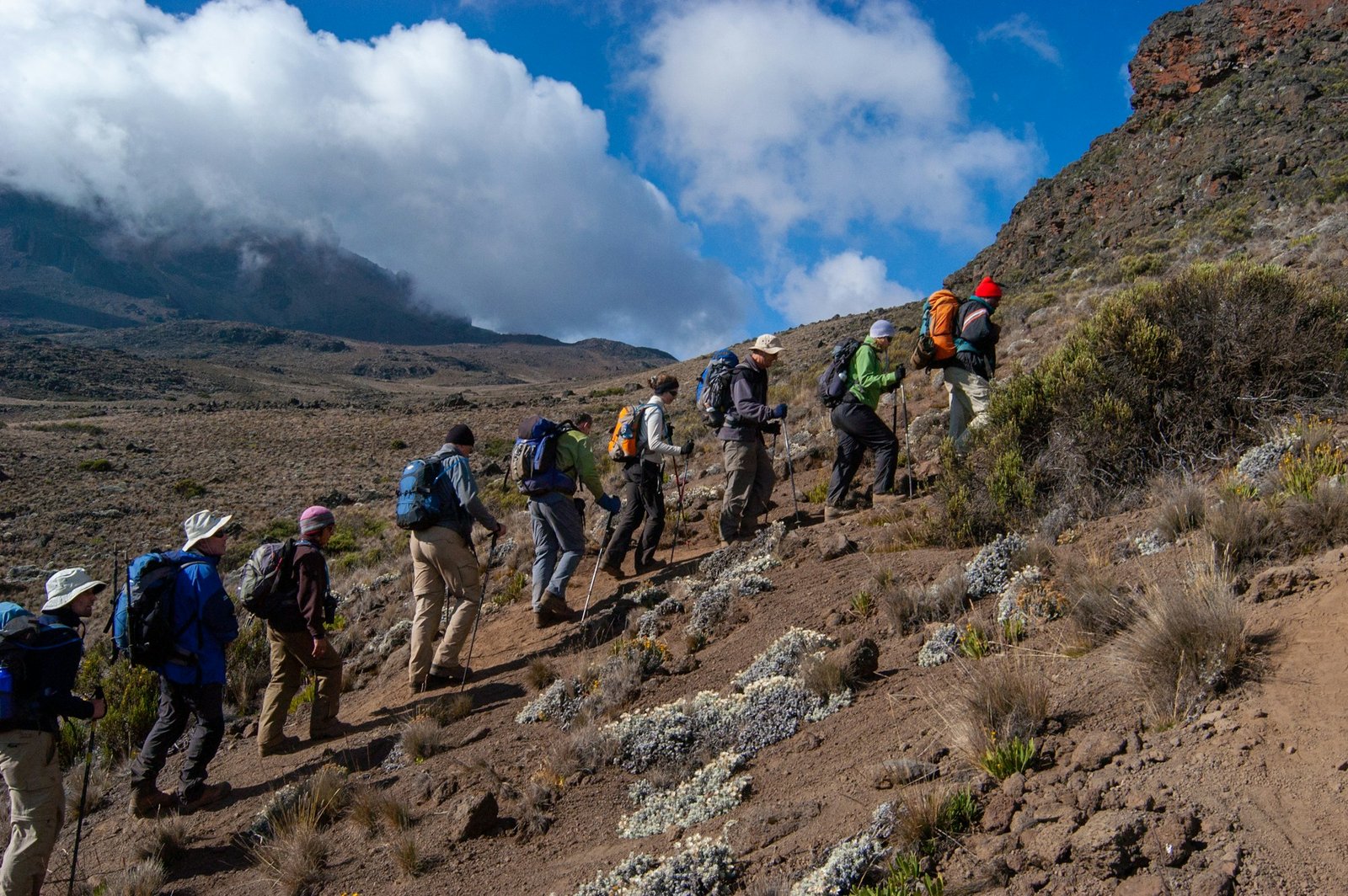
Marangu / Machame routes, Tanzania
Kilimanjaro Climb: Routes, Cost & Summit Guide (2026)
Planning a Kilimanjaro climb? Compare all 7 routes, understand kilimanjaro cost and permits, and get altitude acclimatization advice for Africa's highest peak at 5895 m.
Published May 5, 2026 · Last updated May 31, 2026
Map data: © OpenStreetMap contributors, tiles by OpenTopoMap (CC-BY-SA). Approximate location — verify the exact route on the official trail page before hiking.
Kilimanjaro is the world’s tallest free-standing mountain at 5895 metres, and the only one of the Seven Summits a non-climber can summit without technical gear. What you actually need is altitude tolerance, six to eight days of patience, and a registered guide - independent climbs are illegal in Tanzania. The mountain doesn’t kill you with technical difficulty. It kills you with rate of ascent.
We’ve walked it. This is the route comparison and the altitude reality, in the order they matter.
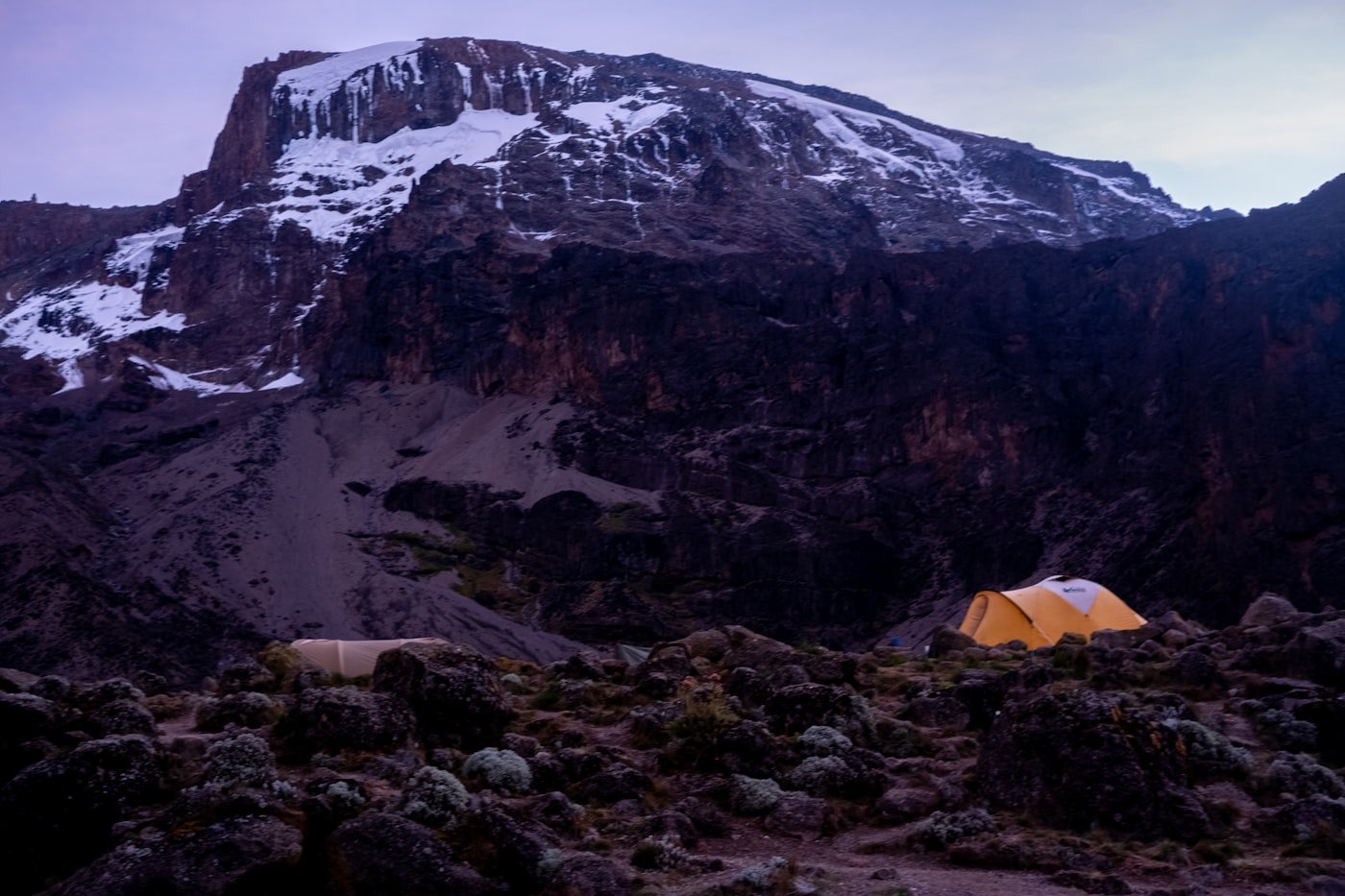
Photo: Ben Sp on Unsplash.
The seven routes, ranked by what they actually do for you
Tanzania has standardised seven public routes up Kilimanjaro. The summit night is the same on all of them - a 1200-metre slog from your high camp through scree to Uhuru Peak, starting around midnight. Everything before that varies wildly.
| Route | Days | Summit success | Acclimatisation profile | Best for |
|---|---|---|---|---|
| Marangu (“Coca-Cola”) | 5-6 | ~50% | Poor - sleeps in huts, climbs and descends fast | Cheapest budgets, hut sleepers |
| Machame (“Whiskey”) | 6-7 | ~75% on 7-day | ”Climb high, sleep low” profile, scenic | Best balance for first-timers |
| Lemosho | 7-8 | ~85-90% | Excellent - long, gradual, varied | Anyone who can afford the time |
| Rongai | 6-7 | ~70% | Drier, less crowded, north side | Wet-season attempts |
| Northern Circuit | 9 | ~95% | Best on the mountain | Anyone who’s failed before, or wants to enjoy it |
| Umbwe | 5-6 | Low - too steep, too fast | Worst | Don’t, unless you’ve already acclimatised |
| Shira | 7-8 | Mid | Starts at altitude - risky | Experienced altitude trekkers |
Real talk: the difference between a 5-day Marangu and a 7-day Lemosho is the difference between maybe summiting and almost certainly summiting. If the budget allows, take the longer route.
What altitude actually feels like
Below 3000 metres, almost nobody has problems. Between 3000 and 4000, you sleep badly, breathe deep, and lose appetite. Above 4000, things start to behave differently:
- Headache that paracetamol mostly handles
- Lethargy out of proportion to the day’s distance - a 4-hour walk feels like 8
- Loss of appetite - you’ll need to force calories
- Vivid dreams or insomnia at high camp
- A 30-second cognitive lag on basic tasks (zipping a jacket, packing a bag)
The dangerous symptoms - confusion, ataxia (drunk-walk), bubbling cough (HAPE), or severe headache that doesn’t respond to descent - are not “normal.” If a teammate stumbles on flat ground, they descend immediately, no negotiation.
Diamox (acetazolamide) helps. Talk to a doctor before you go; don’t self-prescribe.
Summit night - what it’s actually like
You’re woken at 11 pm. Boil water for tea you can barely swallow. Layer up
- headtorch, two base layers, fleece, down jacket, shell, hat, mittens, gaiters. Walk out into -15°C and start uphill in the dark.
The first three hours are scree - two steps up, one slide down. The angle isn’t steep but the altitude makes it punishing. You will move at 200 metres per hour, vertically. That’s it.
Stella Point at 5752 m is the moment you realise it’s done - from there it’s an undulating 45-minute walk along the crater rim to Uhuru. The light is starting. The glacier is in front of you. People cry.
Then you turn around and descend 2200 metres back to high camp before breakfast.
When to go
| Months | What to expect |
|---|---|
| Jan-early Mar | Driest, coldest, clearest summit views - peak season |
| Mar-May | ”Long rains” - mountain is wet and slick - avoid |
| Jun-Oct | Dry, cool, second-busiest window - the Northern Hemisphere holiday season |
| Nov-Dec | ”Short rains” - variable, sometimes excellent, sometimes wet |
What we learned doing it
- Trekking poles are not optional. Every guide we walked with treated poles as gear, not a “support thing for older people.”
- Eat when you can’t. A boiled potato at 4600 m tastes like cardboard. Eat it anyway. The summit is fuelled by what you ate two days ago.
- Layer for stops, not for movement. You overheat in five minutes if you walk in your shell. Take it on and off; the porters won’t carry it while you wear it.
- Tip your team. This is the standard, not optional. Roughly $20-30 per day for the head guide, less for assistants and porters. Your operator will brief you on the convention.
- You will descend faster than you can believe. Two days down what took six days up. Knees take the hit. Poles save knees.
Cost
Mid-tier 7-day Lemosho with a reputable operator runs $2,500-3,500 per person in 2025-26, all-inclusive: park fees (~$1,200 of the total), guide and porter wages, food, tents, transport. Anything well under that is cutting corners somewhere - usually porter wages or food quality.
Park fees go to the Tanzanian government and are non-negotiable. The variable is the operator’s margin and what they pay their team. Pick the operator who treats their porters well; ask about the KPAP partnership when comparing.
Keep reading
- Climbing Kilimanjaro: My 7-Day Lemosho Route Trip Report - what summit night actually feels like, in detail
- Best time to hike in Norway - for the next mountain trip after this one
- Allemannsretten - what wild-camping is like under Norwegian law
- Preikestolen - a one-day cliff-walk that feels like a recovery after Kilimanjaro