Footwear
Vibram Soles Explained - Compounds, Grip, and Resoling
What Vibram soles are: the main rubber compounds compared for grip and durability, how Megagrip handles wet rock, and when resoling beats new boots.
Published June 7, 2026 · Last updated June 7, 2026
Vibram is the sole, not the boot. It’s the yellow-octagon rubber outsole that brands fit to their own boots and shoes - a component, like the membrane or the laces, that you can judge on its own. Two boots with “Vibram soles” can grip completely differently, because Vibram makes many rubber compounds for different jobs. The logo tells you the maker, not the performance.
This page is what the compound names mean and why grip and durability pull against each other.
Photo: maks_d on Unsplash.
What “Vibram” actually tells you
Vibram is an Italian company that has made outsoles since the 1930s. When a boot says “Vibram sole,” it means the outsole rubber and often the lug pattern come from Vibram, fitted to that brand’s boot. It signals a known-quality outsole - but the type of Vibram rubber decides how it behaves. Always look past the logo to the compound name.
The grip-vs-durability trade-off
Every rubber compound sits on one trade-off: softer, stickier rubber grips wet rock better but wears out faster; harder rubber lasts longer but slips more on wet stone. There’s no compound that’s both maximally grippy and maximally durable - physics won’t allow it.
- Sticky compounds shine on wet rock, slabs, and scrambling, and wear visibly faster.
- Hard compounds last for hundreds of trail kilometres and feel less sure on wet stone.
Which you want depends on terrain. For wet Scandinavian rock and roots, grip beats longevity. For dry, abrasive, gravelly trail, durability earns its keep.
The compounds worth knowing
| Compound | Built for | Trade-off |
|---|---|---|
| Megagrip | All-round grip, strong on wet rock | The popular choice; wears faster than hard-wearing compounds |
| Arctic Grip | Grip on wet ice and cold wet surfaces | Specialist winter use, not an everyday tread |
| Hard-wearing / classic compounds | Durability on abrasive trail | Less sure on wet rock |
| Approach / climbing compounds | Smearing on rock for approach shoes | Soft, wears quickly, brilliant on slab |
Megagrip is the one most hikers will see and the safest all-round pick for mixed wet conditions. If a boot lists a Vibram sole but not the compound, that’s worth asking about - it’s the spec that actually changes how the boot grips.
Lugs matter as much as rubber
The compound is half the story; the lug pattern is the other half.
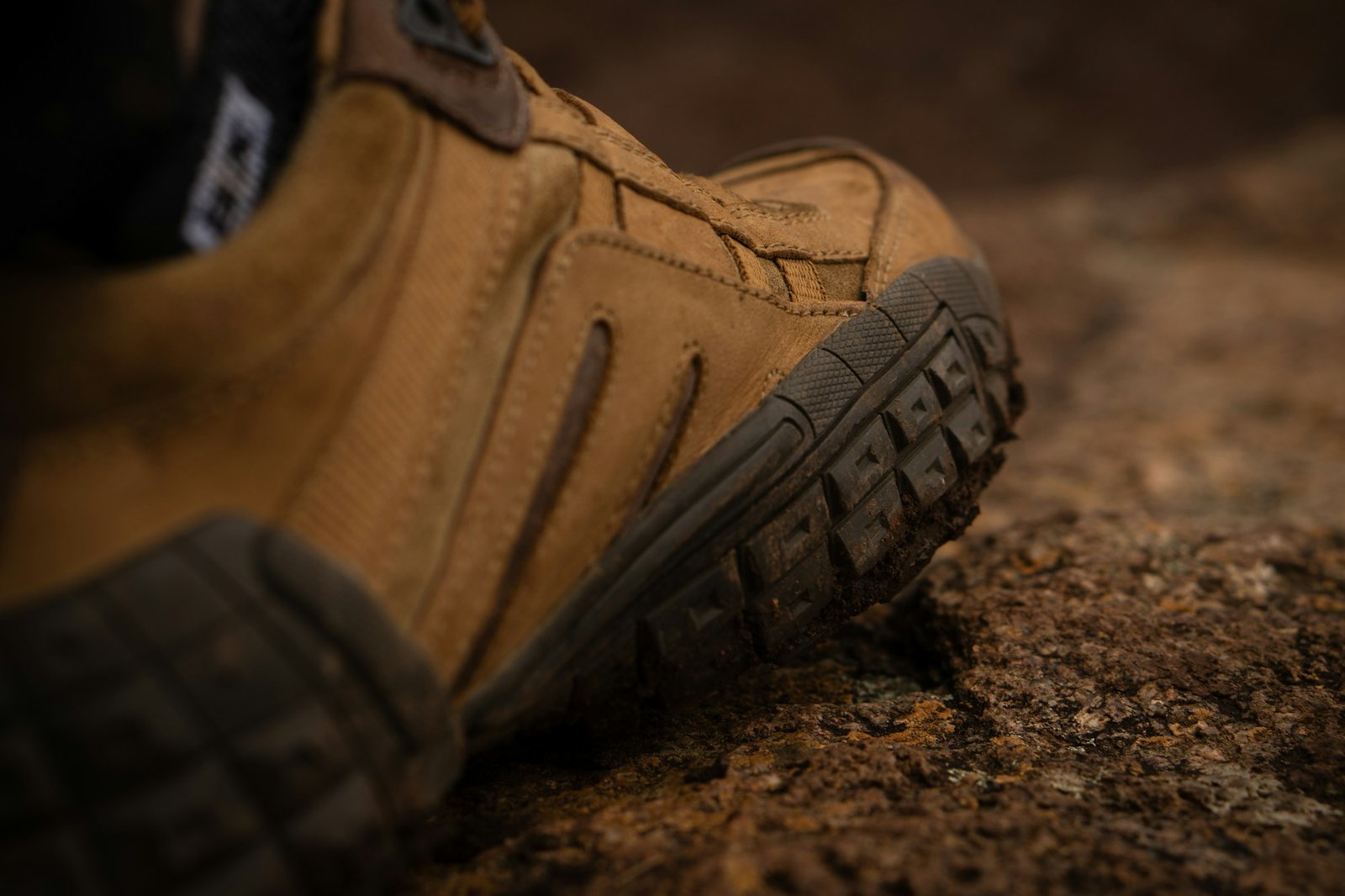
- Deep, widely spaced lugs shed mud and bite soft ground - good for bog and wet grass, slower on hard rock.
- Shallow, dense lugs grip hard ground and last longer - good for rock and gravel, useless in deep mud.
- A pronounced heel brake (the squared-off rear lugs) digs in on steep descents.
A great compound on the wrong lug pattern still underperforms for your terrain. Read both.
Resoling: the reason Vibram matters long-term
The strongest practical case for a Vibram sole is that worn ones can be replaced. A welted or otherwise resoleable boot can take a fresh Vibram sole when the tread wears, which:
- Roughly doubles or triples a quality boot’s life, making it cheaper per year despite the higher sticker.
- Keeps a broken-in, perfectly fitted boot instead of starting break-in over with a new pair.
Not every boot is resoleable - glued, cemented-only constructions usually aren’t worth it. If you hike enough to wear out soles, buy a resoleable boot and budget for a resole rather than a replacement.
What the marketing leaves out
“Vibram sole” alone is a weak spec
Because Vibram makes dozens of compounds, the phrase “Vibram sole” on a tag tells you little. A cheap boot can carry a hard, basic Vibram compound and grip worse on wet rock than a non-Vibram sticky compound. The compound name and lug pattern are the real information.
Sticky soles are a consumable
If you buy a Megagrip or approach-rubber boot for grip, accept that you’re trading tread life for it. That’s the deal, not a defect. Plan to resole or replace the outsole sooner than you would a hard-compound trail boot.
Cleaning helps grip
Grip drops when lugs pack with mud or the rubber glazes with trail dust and oils. A quick scrub of the outsole restores more wet-rock grip than people expect - cheaper than blaming the compound.
Common questions
Are Vibram soles worth it?
For grip, only if the compound suits your terrain - check the name, not just the logo. For longevity, yes, because a resoleable Vibram outsole extends a good boot’s life by years.
What’s the best Vibram compound for hiking?
Megagrip for all-round wet-and-dry grip; a harder classic compound if you prioritise tread life on dry abrasive trail; Arctic Grip only for genuine winter ice.
Can any boot be resoled with Vibram?
Only boots built to be resoled - welted or resoleable constructions. Glued, cemented-only boots usually can’t be, or aren’t worth the cost. Check before buying if longevity matters.
Do Vibram soles grip on wet rock?
The sticky compounds (Megagrip, approach rubber) grip wet rock well; hard durability compounds less so. The compound, not the brand, decides it.
Keep reading
- Hiking boots: how to choose - the boot the sole is fitted to
- Best hiking boots by category - including resoleable picks
- Trail running shoes guide - outsole grip for the lighter end
- Hiking in Norway: the complete guide - the hub
Claude AI helped me with phrasing and proofreading in this article.