Footwear
Merino Wool Socks Guide - Weight, Blends, and Why They Beat Cotton
Merino wool socks for hiking: blend percentages, cushion weights and toe-box fit explained, plus why merino beats cotton and synthetic for blisters and odour.
Published June 7, 2026 · Last updated June 7, 2026
The sock fails before the boot does. A good boot on a cotton sock gives you blisters; a mediocre boot on the right merino sock often doesn’t. Socks are the cheapest upgrade in hiking and the one people skip - they spend €200 on boots and €3 on the thing between the boot and their skin.
This page is what the percentage on the label means and which weight to buy for what.
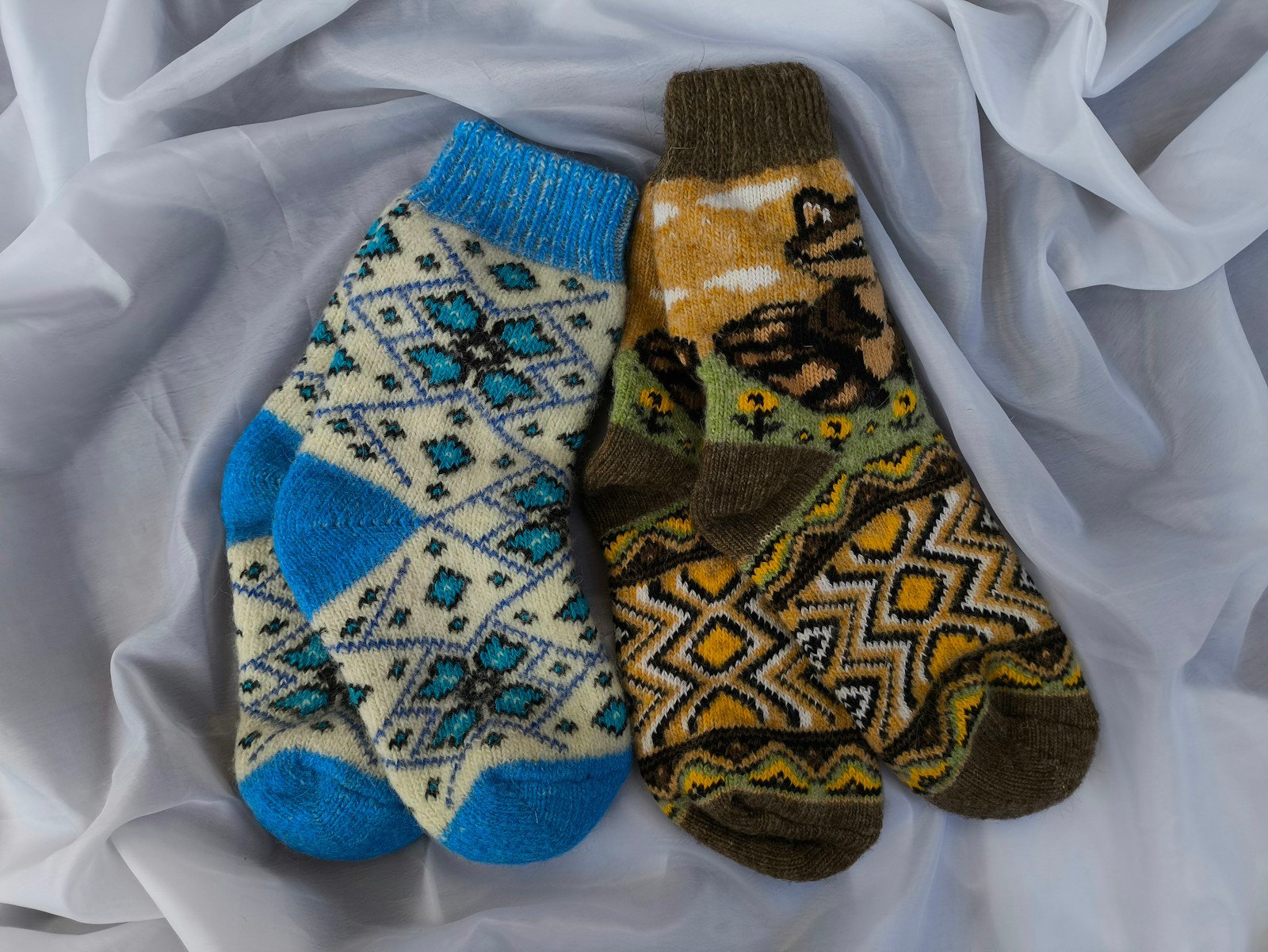
Photo: Anna Evans on Unsplash.
Why merino, not cotton
Cotton absorbs sweat, holds it against the skin, and turns soft when wet - which is exactly when blisters form, from soft skin rubbing inside a wet sock. The mountaineering line “cotton kills” is about hypothermia, but the everyday version is “cotton blisters.”
Merino does three things cotton can’t:
- Wicks moisture away from the skin instead of soaking it up, so the foot stays drier.
- Resists odour - merino’s structure traps the bacteria that cause smell, so a pair survives 3-5 days of hiking before it’s offensive. This is why thru-hikers carry two pairs, not seven.
- Regulates temperature - warm when cold, breathable when hot, because the crimped fibre traps air without trapping much water.
The cost: merino is less durable than synthetic and more expensive than both. The fix is the blend.
Reading the blend
Pure 100% merino is soft and warm but wears through at the heel and toe fast. Almost every good hiking sock is a blend:
| Blend | Behaviour |
|---|---|
| 60-80% merino + nylon + elastane | The standard. Merino for comfort and odour, nylon for durability, elastane for the stay-up stretch. Buy in this range. |
| Under 50% merino | Mostly a synthetic sock with a wool marketing label. Cheaper, less of the merino benefit. |
| 100% merino | Softest, warmest, least durable. Fine for cabin/camp socks you don’t hike hard in. |
The elastane is small (2-5%) but it’s why a good sock stays up and doesn’t bunch under the arch. A sock with no elastane slides down and folds - the classic blister trigger.
Cushion weight by use
| Weight | Where the cushion is | Use for |
|---|---|---|
| Ultralight / no cushion | None | Hot weather, fast running, minimalist shoes |
| Light cushion | Thin pad underfoot | Summer day hikes, trail running |
| Midweight | Cushioned heel + ball + sometimes shin | The all-rounder for multi-day hiking |
| Heavyweight / mountaineering | Full thick cushion | Cold, stiff boots, winter |
More cushion is not more comfort across the board - a thick sock in a snug boot crushes the cushion flat and tightens the fit, which causes the pressure points it was meant to prevent. Match sock thickness to the room in the boot, and buy the boot with the sock you’ll wear.
Fit and the toe seam
- Size matters. A sock too big bunches; too small pulls the toe box flat. Buy the size for your foot, not “one size fits 38-46.”
- Seamless or flat toe seam. A bulky toe seam sits right where toes hit the front on a descent. Most good hiking socks now have a flat or hand-linked toe - check the label.
- Height follows the boot: ankle socks under low shoes (the cuff stops debris and heel rub), crew or higher under boots so the boot collar never touches skin.
What the marketing leaves out
“Anatomical” left/right socks
Some brands sell L/R-specific socks. Marginal benefit, real downside: you can’t pair them blind in the dark of a cabin morning, and a lost sock kills the pair. Skip unless you have a specific fit problem.
Lifetime guarantees
A few brands replace worn-through socks free. Worth knowing if you wear holes fast - it changes the real cost per year of a premium sock. Read whether the guarantee covers normal wear or only defects.
Liner sock systems
A thin liner under a thicker sock moves the friction between the two socks instead of between sock and skin. It works for blister-prone feet on long trips, at the cost of a hotter, more fiddly setup. Try it only if single socks keep blistering you.
Drying time on the trail
Merino dries slower than thin synthetics. On a multi-day hike, wash one pair at the cabin and clip it to the pack to dry while you wear the other. Two pairs, rotated, is the whole system.
Common questions
How many pairs for a multi-day hike?
Two. Wear one, wash and dry the other. Merino’s odour resistance is what makes two enough - you’re not carrying a fresh pair per day.
Are merino socks too hot for summer?
No, if you buy light or ultralight cushion. Merino breathes and regulates - a thin merino sock is more comfortable in summer heat than a thick synthetic one.
Why do my merino socks get holes so fast?
Either the merino percentage is too high (low durability) or the fit is wrong (friction in one spot). Move to a 60-75% blend with reinforced heel and toe.
Smartwool, Darn Tough, Icebreaker - does brand matter?
Construction matters more than logo: blend percentage, flat toe seam, reinforced wear zones, real elastane. Several brands hit those marks. Buy the spec, not the name.
Keep reading
- Hiking socks: materials and fit compared - the broader category
- Trail running shoes guide - the shoe that pairs with a thin merino sock
- Merino wool base layer guide - the same fibre, for your top half
- Hiking in Norway: the complete guide - the hub
Claude AI helped me with phrasing and proofreading in this article.